 by
by 
Installing an EV charger becomes a usual service since a lot of homeowners prefer switching from gas cars to electric ones. So no wonder you’re curious: what is the cost of installing a home EV charger. Shortly, it ranges between $800 and $4,500, and though this range is pretty big, we are going to clear up all factors influencing these numbers. The variety of houses we already serviced showed that every project is unique when it comes to electrical panels and their capacity, which influence the final price the most. In this article we look closely at all factors so you can estimate approximate numbers for your specific project.
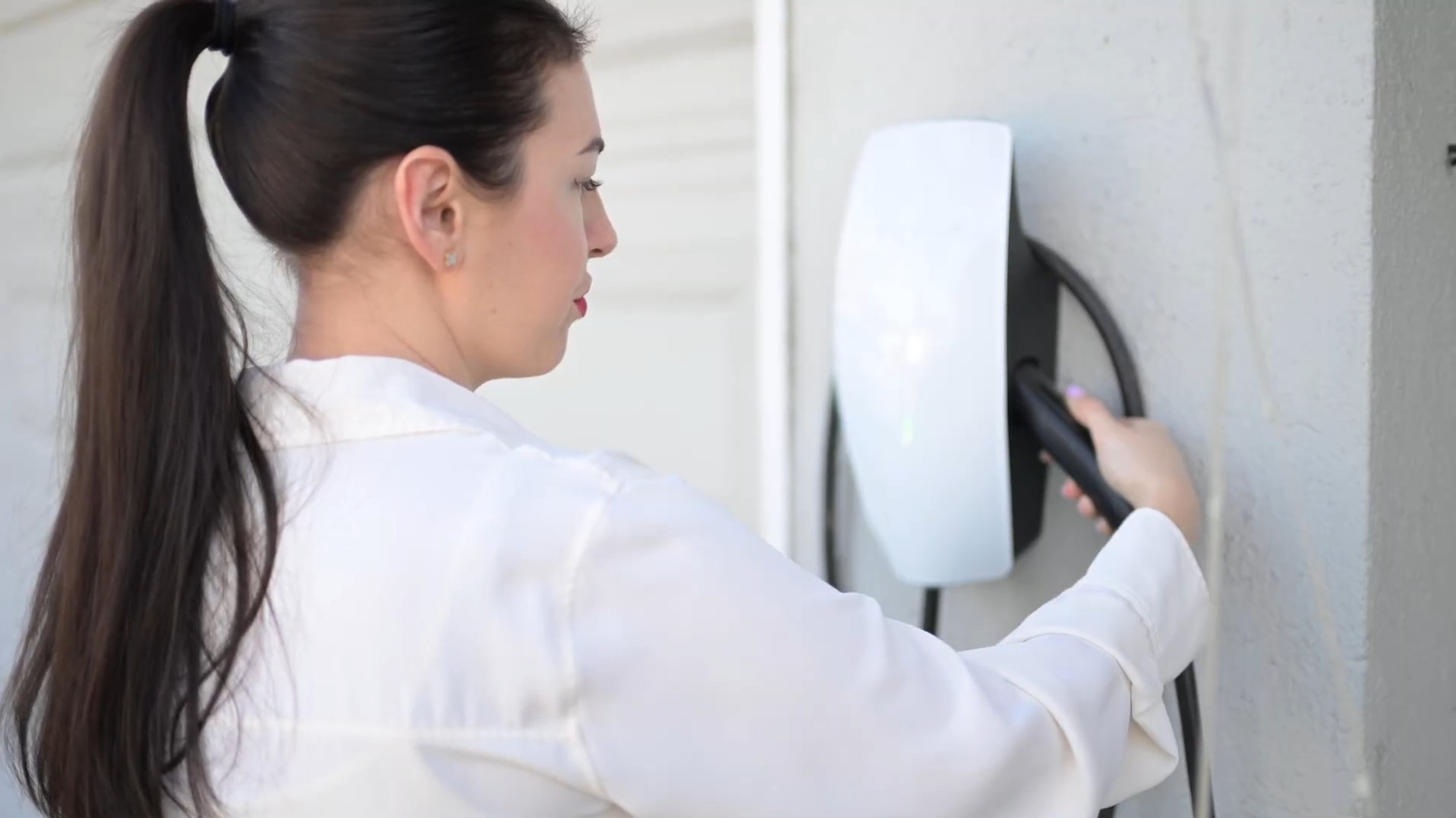
How Much Does It Cost to Install an EV Charger at Home?
Most homes in the Bay Area already have their electrical system in good shape. If that’s your case, the home EV charger installation cost will be between $1,000 and $2,500. And as your trusted electrical contractor, we will ensure that our installation will be flawless.
Here’s a typical price breakdown:
| Installation Type | Typical Installation Cost |
| Level 1 (standard outlet) | $300 – $600 |
| Level 2 (basic install) | $800 – $1,500 |
| Level 2 (long wiring run) | $1,500 – $2,500 |
| Level 2 (with panel upgrade) | $2,500 – $4,500+ |
Our seasoned electrician Vitalii shared some insight into real projects:
In reality, a lot of homeowners want to keep their 100-amp panels while calculating how much to install EV charger at home to save up on an upgrade. However, if our professional calculates that such a panel won’t handle additional loads, they’ll insist on an upgrade, which will drive the bill to around $3,200 total. Yet, if you already have a 200A panel, and luckily it’s located somewhere near the garage or parking place, you can count on fitting the installation in $1,200-$1,500.
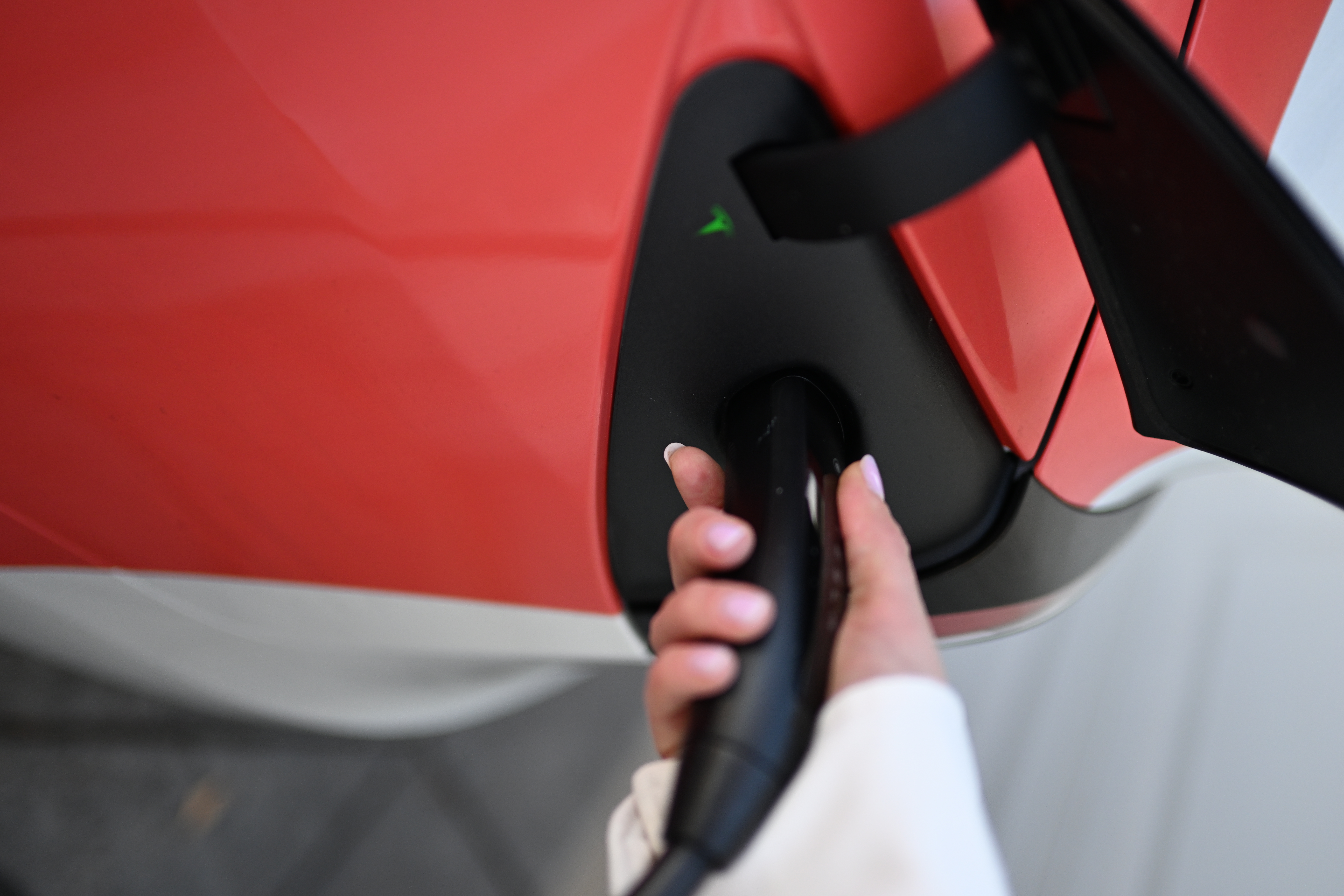
What Affects the Cost of Installing a Home EV Charger?
Electrical Panel Capacity
It all starts with the source of energy. In our case it’s your electrical panel. While a 100-amp panel often doesn’t have enough capacity for a Level 2 charger, a 200-amp panel is the standard for modern homes and can usually handle EV charging without issues. If that’s not your case, consider the electrical panel upgrade, calculating the cost for EV charger for your home.
Distance from Panel to Garage
The farther your charger is from the panel, the more labor and materials are required.
Electricians usually charge per foot for wiring and conduit.
- Short run (5–10 ft): minimal cost
- Long run (40–60 ft): can add $800–$1,500
Detached garages are where costs really start to climb up.
Permit & Inspection Fees
Surely, papers are important to make electric car charger installation legit. Permits in San Jose usually cost around $100–$500 per project and are considered obligatory. But don’t worry, all boring paperwork is covered by your trusted contractor.
Hardwired vs Plug-In Installation
- Plug-in chargers are cheaper and easier to replace
- Hardwired chargers are more permanent and often required outdoors
Hardwired setups usually cost a bit more upfront but are more durable long-term.
Indoor vs Outdoor Mounting
Outdoor installations need the following:
- Weatherproof enclosures
- Extra conduit
- Protection from the elements
This can add $200–$800 to the total cost.
Hidden Costs Homeowners Don’t Expect
Here’s where things can catch people off guard. The cost of installing EV charger at home isn’t always obvious upfront because of these extras:
- Panel upgrades
- Drywall repair after running wiring
- Trenching for detached garages
- Load calculations for safety compliance
- Permit delays or reinspection fees
A common situation: a homeowner plans for a $1,200 install — then finds out their panel is maxed out. Final cost? Closer to $3,000.
Average Home EV Charger Installation Costs in California
In California, prices for San Jose EV charger installation tend to run slightly higher due to labor costs and stricter code requirements.
Typical ranges:
- Standard installation: $1,200 – $3,500
- With panel upgrade: $3,500 – $5,500+
Electrical Requirements for a Home EV Charger
We know there is nothing more precious than time, so installing a Level 2 EV charger is a logical decision to save some. The US Department of Energy states that this type of charger completes the process twice as fast as Level 1 chargers. However, there is a vital safety rule to have a dedicated 240-volt circuit for installing a Level 2 charger.
Here’s a quick breakdown:
| Requirement | Details |
| Voltage | 240V |
| Breaker Size | 40A–60A |
| Circuit | Dedicated |
| Panel | 200A recommended |
| Code | NEC Article 625 |
You can’t avoid calculation before an electric car charger installation because that’s where safety begins. For reference, a Level 2 charger is using 30–50 amps continuously, and it’s impossible to see if your electrical panel can handle that without prior calculations. All safety measures and loads for residential electrical systems are determined with NEC Article 625, so you can find all the standards there.
Federal Tax Credits & Rebates
In California you still can get a tax credit that covers up to 30% of the installation cost or up to $1,000. Also, you can reduce the overall cost of installing a home EV charger with other local programs, such as we have in Fuse Service, with which you can additionally save up to $200 on the installation.
Is It Worth Installing a Home EV Charger?
In most cases — yes. Home charging is:
- More convenient
- Typically cheaper than public charging
- Better for overnight charging
- A long-term value add to your home
Of course, at first the cost of installing a home EV charger might seem like an optional upgrade, but with time it pays for itself.
Schedule a Professional EV Charger Installation
The only way to ensure electrical safety while getting a level 2 EV charger installation is to hire a professional electrician from Fuse Service. Our specialists know how to calculate loads, pursue permits, and provide code compliance. Schedule your service now and enjoy your private charging tomorrow.