 by
by 
Flushing a water heater is not just a question of physical action. It is more about how to extend the life of your water heater and save on bills. Let’s learn together how to flush a water heater yourself and not lose out on the cost of electricity.
Why You Should Flush Your Water Heater

Regular flushing your water heater results in almost zero sediment buildup. But what does this mean? That’s right: hello, breakdowns. Dirt and minerals accumulate at the bottom of the tank. This layer turns into a heat barrier and causes the device to consume more energy and overheat. Cleaning of the water heater helps to:
- Extend the life of your appliance;
- Ensure even water heating;
- Reduce the risk of water contamination;
- Save money. How much does it cost to flush water heater? It’s ultimately cheap, and using a cleaned water heater is even cheaper.
Signs Your Water Heater Needs to Be Flushed
How can one get to know it’s time to flush your water heater? Easy!
Noisy Operation
It’s not only a problem of water heaters. What happens if AC drain is clogged? Well, if you hear strange noises, it mostly means that sediment is interfering with heating. That’s exactly what a clog looks like. And that’s exactly the reason for these scary noises.
Inconsistent Water Temperature
This common problem arises due to poor heat transfer. Imagine how poorly a convector heater would work if you covered it with a blanket. Scale before water heater cleaning is like that blanket.
Rusty or Cloudy Water
Cloudy water or rust is a sign that the tank definitely needs cleaning. A hot water heater flush is definitely what your appliance needs!
Longer Heating Times
If the water takes forever to heat up, it may mean that the heating efficiency is critically low. Why? Probably it’s due to sediment.
Tools & Safety Precautions
Before you start flushing water heater, take a look at this checklist:
- Hose
- Gloves
- Bucket
- Wrench
- Rags
The pressure in the tank shouldn’t be too low or too high—check it in advance!
Step-by-Step: How to Flush a Water Heater
This process is quite simple if you do everything right. So, how to flush a water heater and save time? Just follow the instructions below!
Turn Off the Power or Gas
Disconnect the power or gas supply to the device. For electric models, turn off the circuit breaker in the fuse box. Or the valve, if you have a gas model.
Shut Off the Cold Water Supply
Close the cold water supply valve to stop water from flowing into the tank.
Drain the Water Heater
Connect a hose to the drain valve (you can find it at the bottom of the tank) and the other end to a bucket or drain. Then just open the valve to flush. This is actually the main step in how to drain a hot water tank.
Flush Out the Sediment
Open the cold water tap for a few minutes to wash out any sediment. Clean water heater until the water runs absolutely transparent.
Refill and Power Up
Now all you have to do is close the drain valve and turn the cold water supply back on. Once the tank is full, turn on the power or gas.
How Often Should You Flush a Water Heater?
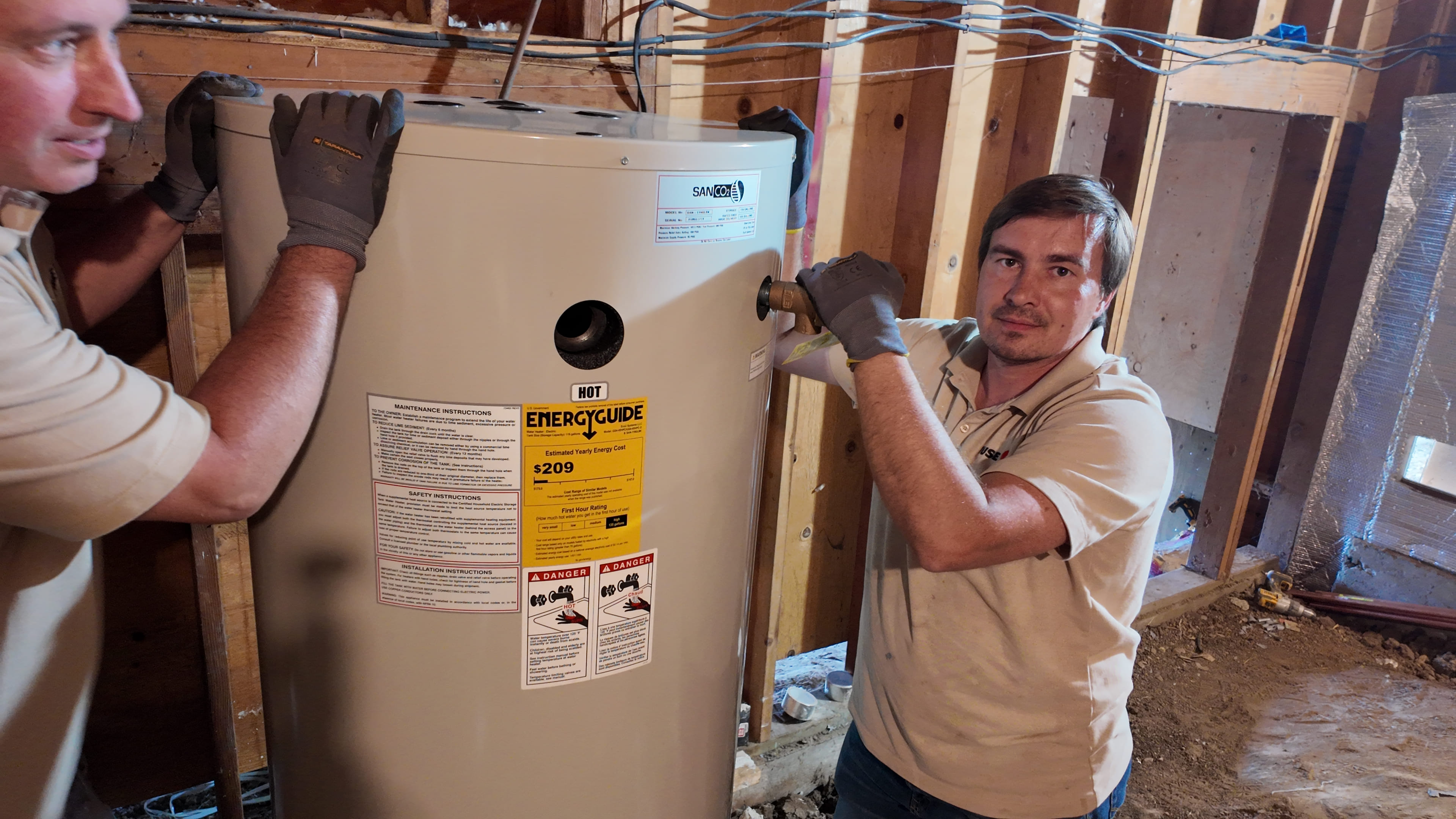
The Fuse Service team’s tip: clean your water heater at least 1 time per year. That’s what our plumbing team lead, Dmitry, said:
“It’s different for hard water. In that case, once a year is not enough. But once every six months is quite acceptable.”
How Long Does It Take to Flush a Water Heater?
The short answer here is up to one hour. However, if we are to answer the question of how long it takes to drain a water heater specifically, the answer is even better. It’s about 20 minutes. The rest of the time is spent on preparation and filling.
When to Hire a Professional Service
If you have no experience, the water is not draining, or there is a dangerous smell of gas, the best way is to call in the experts. Fuse Service, CA, offers professional cleaning water heater service at an affordable price. Need a water heater replacement or repair? Looks like a job for us!