 by
by 
Whole House Water Filter Installation — Quick Answer
Ever wonder why the same whole house water filter installation can cost one homeowner $850 and another almost $3,000? The answer is usually hiding behind your walls. Clean, accessible plumbing keeps things on the lower end. Older systems, tight spaces, or more complex setups push the price up fast.
Such a job may take two to six hours, depending on several factors. Simple sediment setup at a clean main line is closer to two hours of work. A multi-stage system in a 1960s utility room is closer to six. No two homes are the same, and that’s really the point — knowing the range ahead of time just helps you stay realistic and avoid surprises.
| What you’re installing | Typical total cost | Time |
| Basic sediment filter | $850–$1,400 | 2–3 hrs |
| Multi-stage carbon/KDF | $1,800–$2,900 | 3–5 hrs |
| UV + carbon combination | $2,500–$4,000 | 4–6 hrs |
| Water softener (whole house) | $2,500–$5,000 | 4-6 hhrs |
| Labor only | $300–$1,000 | — |
Whole house water filter installation drops a single filtration unit onto the main supply line. Get the placement right, and every fixture in the house benefits from it.
Where Should You Install a Whole House Water Filter?
The correct installation point is right after the main water shutoff valve and before the water heater. A few things that actually matter for placement:
- Ideally installed near the main water entry point for the house (garage, side wall, or utility area are common in California homes)
- Close enough to a drain if the system requires flushing or backwashing
- Accessible for regular maintenance and filter changes
In California’s climate, anti-freeze protection isn’t a major concern. However, accessibility remains crucial. If the filter is difficult to reach, it will likely go unmaintained over time. The best place to install it is always the most practical one — next to the main water supply line.
What You Need Before Installation (Tools & Prep)
Wait for the techs equipped with a pipe cutter, adjustable wrench, Teflon tape, and drill. That’s the bare minimum for an average job.
Test your water before buying anything. The EPA recommends testing for lead, nitrates, bacteria, and hardness minerals. A chlorine filter won’t do anything for iron. An iron filter won’t help with chlorine. Get the test first.
Also check your main line diameter. Most homes run 3/4″ or 1″ pipe at the entry point. Measure before ordering a system — the wrong port size means extra fittings or a return trip to the hardware store.
Here are three installation scenarios worth knowing about:
- Newer home with accessible plumbing — the straightforward case. Clean lines, standard fittings, a professional plumber gets it done in 2–3 hours.
- Older home with galvanized or corroded pipe — the connection point may need pipe replacement before the filter goes in. Add $200–$600 and plan for a longer visit.
- Tight utility space with no easy access — custom bracketing, offset fittings, more time. Budget an extra hour or two regardless of who’s doing the work.
How to Install a Whole House Water Filter (Step-by-Step)
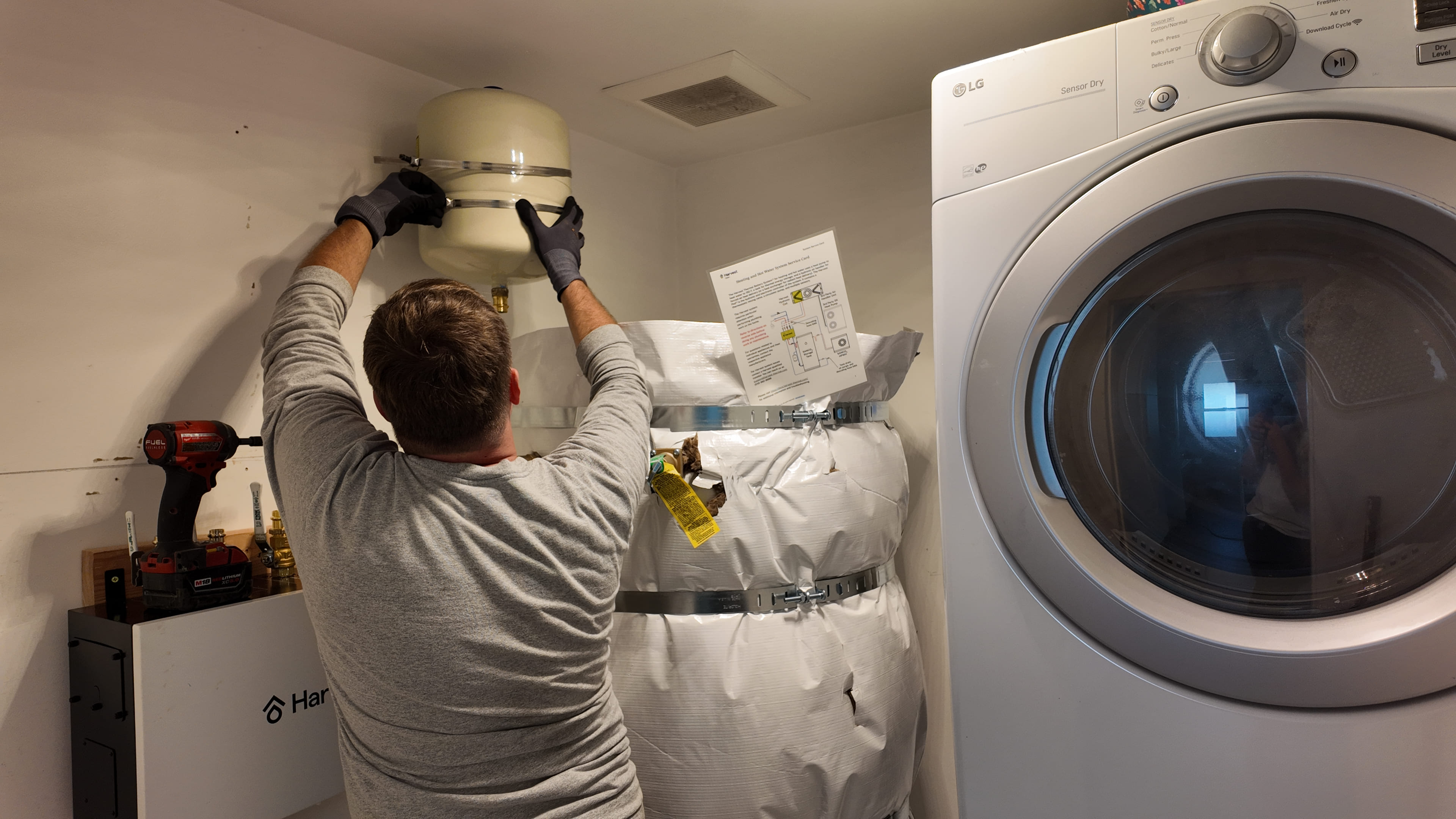
Step 1: Shut the Water Off
First, our technicians fully shut off the main water valve. A downstream faucet is opened to confirm that the pressure has dropped completely. Then they put a bucket under the work area — there’s always residual water in the line.
Step 2: Cut the Pipe
After that they mark where the filter housing will sit. The next step is to cut with a pipe cutter or hacksaw, leaving room for the housing and fittings on both sides.
Step 3: Mount the Housing
It’s necessary to secure the bracket at the marked location. Level matters — a crooked housing puts stress on the inlet and outlet over time.
Step 4: Connect Inlet and Outlet
After that the techs wrap male threads with Teflon tape. 3–4 turns are absolutely enough. They attach the fittings hand-tight and then a quarter turn with a wrench. Plastic housings crack if you overtighten. The quarter-turn rule is real.
Step 5: Add a Bypass Valve
Not always included in kits, but worth $150–$500. A bypass lets technicians isolate the filter for maintenance without cutting water to the whole house. Almost any whole house filter setup diagram shows it — install it even if the kit doesn’t come with one.
Step 6: Load the Cartridge
Now all that is left is to put the housing back together the way the manufacturer says. Techs screw the cap on by hand first, then just snug it a bit with the proper housing wrench. They don’t use a pipe wrench — it’s too strong and can crack the housing.
Step 7: Turn the Water Back On
It’s a very important step to let the system pressurize, then check every connection. Even a slow drip behind a wall panel becomes a problem in six months.
Step 8: Flush
Finally, you can run a cold tap for 5–10 minutes. New carbon media releases fines that can discolor the water briefly. Normal — clears fast.
DIY vs Professional Installation — What Makes More Sense?
This isn’t really a DIY job. Even if the main line is easy to reach, you need real plumbing experience to cut into it, seal everything properly, and not mess up pressure in the system. Without HVAC or plumbing background, it’s very easy to get leaks or install it wrong. It gets worse with older homes, especially with galvanized or worn pipes — you can do more harm than good.
Whole house filters should be installed by a professional. Understanding how to install a whole house water filter correctly is one thing; doing it in a 1970s house with corroded galvanized pipe is another. Plumbers in Santa Clara handle whole house filtration regularly and know local permit requirements.
NSF International notes that improper installation can void certification on NSF-listed systems. If the warranty matters to you, follow the manufacturer install spec exactly — or have a licensed plumber do it.
How Much Does Whole House Water Filter Installation Cost?
$850 to $5,400 covers most of what people actually spend. The whole house water filter installation cost breaks into three parts: equipment, labor, and maintenance.
Equipment ranges from about $100 for a simple sediment filter housing to $4,000+ for a complex job, but everything mainly depends on the type of setup. Installation usually costs around $300–$1,000 if the job is straightforward and easy to access. But of course it can go up to about $2,000 if you need any additional plumbing work. Maintenance is typically $50–$300 per year for replacement cartridges, with the exact cost depending on water quality and system size.
According to Pure Water Products, one of the most overlooked cost factors is flow rate sizing — a system rated below your home’s peak demand creates pressure problems that often lead to a second install. Get the sizing right the first time.
Common Mistakes That Lead to Leaks or Poor Performance
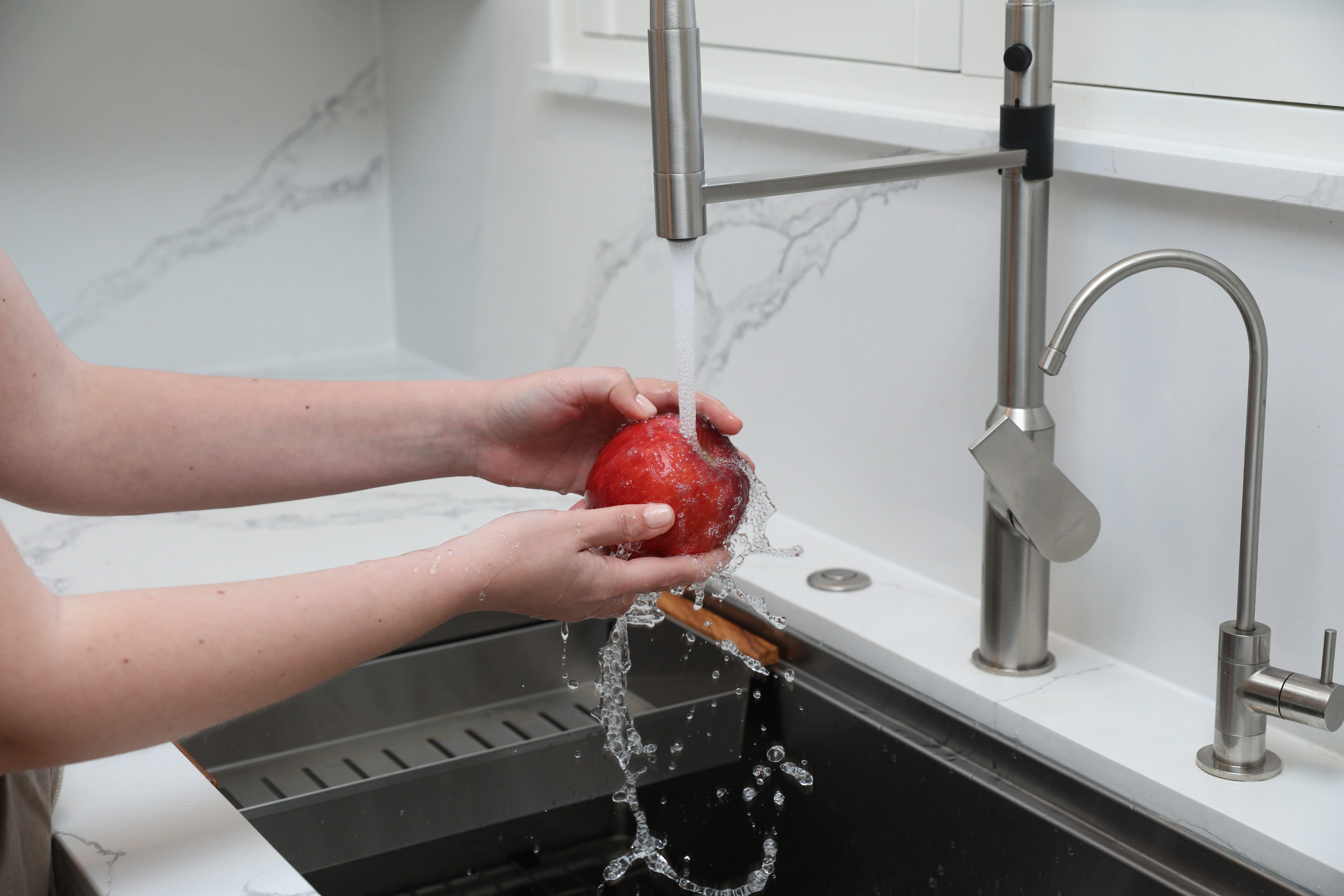
No Bypass Valve
Every filter change becomes a whole-house water shutoff event. Small addition, big inconvenience to skip it.
Undersized System
A 10 GPM filter in a house that peaks at 15 GPM means weak pressure every time two showers and the dishwasher run at once. Match the GPM rating to actual peak demand — not average use.
Overtightened Plastic Fittings
Hairline cracks don’t leak immediately. They show up three weeks later behind the drywall. Hand-tight plus a quarter turn is the spec.
Buying Without Testing
Installing whole house water filter systems without a water test is a coin flip. The wrong media does nothing. A $50 test removes the guesswork.
Wrong Stage Order
Carbon before sediment means the carbon clogs fast. Sediment goes first. Almost any whole house filter setup diagram is drawn this way for a reason — follow the order.
Bad Placement
If you install it after the water heater, only your hot water gets filtered — and the heater still gets unfiltered water. If you install it before the main shutoff, it becomes harder to isolate the system and therefore to maintain it. The correct sequence matters for both performance and maintainability.
Whole House Water Filter Maintenance After Installation
Water filtration system installation is the easy part. A whole house water filtration system installation that actually performs well five years from now depends almost entirely on keeping up with maintenance.
Standard schedule after installing whole house water filter:
- Every 3–6 months — sediment pre-filter cartridge
- Every 6–12 months — main carbon or KDF stage
- Annually — UV bulb replacement if applicable; inspect O-rings and bypass valve
- Every 2–5 years — housing inspection, check for micro-cracks or mineral buildup
Cartridge costs run $50–$200 each. Write the install date on a sticker and put it on the housing. It sounds basic. It works.
Final Thoughts Before You Install a Whole House Water Filter
Good whole house water filtration system installation starts before you touch the plumbing — with a water test. Everything else follows from that. Get the sizing wrong and the pressure suffers. Skip the bypass valve and every filter change becomes a hassle.
Install water filter whole house projects that hold up are the ones where someone thought through the sequence before cutting anything. The system itself is the easy part.