 by
by 
If you prefer individual temperature control in every room, a mini split will almost always win the mini split vs central air electric bill race — no ducts means no wasted cooling. Central air conditioner can still hold its own for whole-home comfort, but only when the ductwork behind the walls is actually in good shape. Brand names get all the attention. Sizing, ducts, and installation quality are what really move the number on your bill.
| Situation | Lower-bill winner | Why |
| Cooling one room or a small addition | Mini split | No ducts, no duct losses, direct delivery |
| Cooling a whole house with good ductwork | Central air conditioner | Even airflow, one thermostat, less zoning hassle |
| Older home with leaky, uninsulated ducts | Mini split | Central air conditioner loses cooled air before it ever reaches the room |
| New build with sealed, sized ducts | Either | Bill depends more on SEER2 rating and sizing |
How Mini Splits and Central Air Conditioners Use Electricity Differently
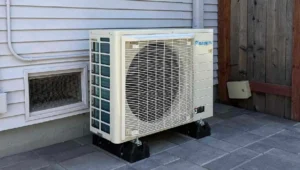
Picture a mini split as a courier that hands cooled air directly to the room that needs it. There’s an outdoor unit, a refrigerant line, and an indoor head mounted right where it’s needed.
Central air conditioner works more like a mail-sorting facility. One unit cools all the air, then a maze of ducts distributes it to every room in the house — including the guest room nobody’s used since Thanksgiving. Air traveling through metal ductwork in a hot attic sheds energy before it reaches you. A mini split skips that entirely.
| Feature | Mini Split | Central Air Conditioner |
| Delivery method | Refrigerant line to indoor head | Ductwork throughout the home |
| Zoning | Room-by-room, built in | Requires separate zoning dampers |
| Typical duct losses | None | 20-30% in older or poorly sealed systems |
| Best for | Additions, single rooms, apartments | Whole-home cooling with good ducts |
| Possible drawback | Multiple heads can look busy on walls | Duct leaks quietly raise the bill |
The Main Reason Mini Splits Can Lower Electric Bills
You only cool the rooms people use
Ask any homeowner with a spare bedroom: why pay to chill a room nobody’s in? A mini split lets you shut cooling off in spaces that sit empty, while central air conditioner, without zoning, treats every room the same whether it’s occupied or not.
Higher SEER2 ratings are common
Plenty of mini split units on the market now carry SEER2 numbers well above what older central air systems were built with. Higher SEER2 simply means more cooling squeezed out of every kilowatt-hour.
No ductwork means no duct losses
This one’s easy to underestimate. Ducts snaking through a scorching attic can lose a real chunk of cooled air before it ever makes it to a vent. Skip the ducts, skip the loss — which is exactly why so many homeowners look into a mini split installation when they only need to cool one space, not the whole house.
When Central Air Conditioner May Be Better for Your Electric Bill
Whole-home cooling with good ductwork
But flip the scenario around. Say your ducts don’t leak, the attic run is wrapped in insulation, and whoever installed the system actually sized it for your square footage. In that case, one central air unit pushing air through tight ductwork can cool a big house better than five mini split heads in different rooms.
One thermostat, simpler habits
Sometimes fewer buttons just works better. One thermostat controls the whole house, so there’s no zone tucked in a back bedroom quietly running all week because someone forgot about it. Fewer settings to manage sometimes means less wasted energy, not more.
Larger, open floor plans
Homes without a lot of interior walls tend to cool more evenly with a central conditioner system. A mini split depends on line-of-sight airflow from each head, so a wide-open layout can leave corners feeling less comfortable.
Monthly Cost Example: Mini Split vs. Central Air Conditioner
Numbers shift depending on climate, local electricity rates, and square footage, but this pattern comes up again and again when homeowners weigh the cost to run mini split vs central air conditioner.
| System | Example use pattern | What affects monthly cost |
| Mini split, single room | Running several hours a day in one room | Room size, insulation, SEER2 rating |
| Central air, whole home | Running most of the day across 2,000+ sq ft | Duct condition, home size, thermostat settings |
| Mini split, multi-zone | 3-4 heads used on different schedules | Number of zones actually running at once |
| Central air, aging ducts | Whole home, ducts never resealed | Duct losses, insulation, HVAC system sizing |

What Affects the Electric Bill More Than the Brand Name
Walk into any showroom and salespeople will talk brands all day. But the number on your central air electric bill doesn’t care whose logo is on the unit. It cares about the details underneath — and that’s really the heart of the mini split vs central air efficiency debate.
| Factor | Why it affects the bill | Homeowner action |
| HVAC system sizing | An oversized or undersized unit cycles inefficiently | Ask for a proper load calculation before buying |
| Ductwork condition | Leaks and gaps waste cooled air | Have ducts inspected and sealed |
| Insulation | Poor insulation lets heat back in fast | Check attic and wall insulation levels |
| Zoning | Cooling empty rooms wastes energy | Use zoning or shut off unused mini split heads |
| Thermostat settings | Constant adjusting spikes energy use | Set a steady, moderate temperature |
| SEER2 rating | Higher ratings use less electricity per BTU | Compare SEER2 numbers, not just price |
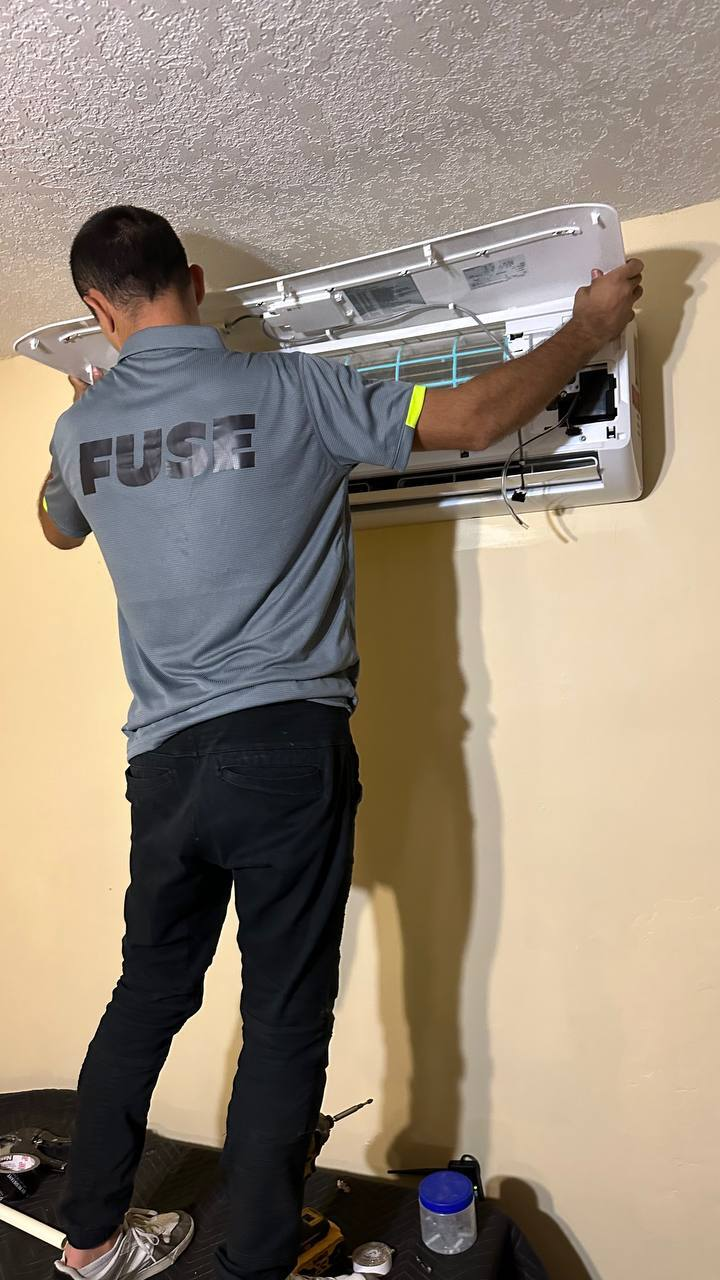
“Comparing brand names is useless. It’s sizing, duct condition, airflow, insulation, how people use zoning, thermostat habits, the SEER2 rating, installation quality, and what the local utility charges per kilowatt-hour. Change any one of those and the bill moves — brand or no brand. I’ve seen premium systems waste energy because they weren’t installed correctly. And I’ve seen basic systems perform great when everything was done right. That’s why we always look at the whole picture before making a recommendation.” — Alex, an HVAC installer at the Fuse Service team.
Mini Split vs. Central Air Conditioner by Home Type
| Home situation | Better fit | Why |
| Small apartment or condo | Mini split | No room for ductwork, low energy savings needed for a small space |
| Home addition without existing ducts | Mini split | Cheaper than extending central air ductwork |
| Larger single-family home | Central air | One system covers the whole footprint efficiently |
| Historic home with no duct chases | Mini split | Avoids costly duct installation in walls that can’t be modified |
| New construction | Either | Ducts can be sized and sealed correctly from day one |
Installation Cost vs. Electric Bill Savings
The mini split vs central air cost conversation trips people up because they only look at the sticker price. The better question is how fast the savings on your monthly electric cost pay back what you spent installing the system in the first place.
| Item | Mini Split | Central Air |
| Typical upfront cost | Lower for single rooms, higher for multi-zone whole-home setups | Higher for whole-home coverage, especially with new ductwork |
| Monthly savings potential | Strong for partial-home cooling | Strong for whole-home cooling with tight ducts |
| Payback timeline | Faster for single-room use | Slower, but spread across more square footage |
If you’re weighing the cost of mini split vs. central air conditioner as part of a bigger renovation, it’s worth looking at the full HVAC replacement cost picture too — labor and ductwork can swing those numbers more than people expect.
Common Mistakes That Make Either System Cost More to Run
Skipping a load calculation
Guessing at unit size based on square footage alone is how homes end up with equipment that’s simply the wrong fit — too big, too small, either way inefficient.
Ignoring duct leaks
A leaky duct doesn’t announce itself. It just quietly pads the central air electric bill month after month while the system itself keeps running exactly as it should.
Running every mini split head at once
Some homeowners fall into the habit of running every head in the house, including the ones in rooms nobody’s using. That habit erases most of the energy savings a mini split was supposed to deliver.
Setting the thermostat too aggressively
Dropping the temperature five or six degrees the second you walk in the door feels satisfying, but it forces the compressor to work overtime. Picking a moderate number and leaving it alone almost always costs less by the end of the month.
Mini Split vs. Central Air Conditioner: Which One Should You Choose?
Got one room, an addition, or a space that never had ducts run through it? Then choose the first option between mini split vs central air cost because it gives you direct control there, and nobody has to open up a wall to make it happen. Choose central air conditioner if you’re cooling a full home and the ducts are sealed and sized the way they should be — one thermostat, one system, less to manage.
Consider both if you already have whole-home central air conditioner but one room always runs too warm or too cold. A single mini split head can patch that problem without ripping out a system that otherwise works fine.
Whatever direction fits your house, the quality of the AC installation or ductless setup will do more for your mini split electric bill long-term than whichever name is stamped on the unit. Sizing and installation quality matter enough that ENERGY STAR lists them among the top factors in long-term cooling costs. And the U.S. Department of Energy has flagged something worth knowing: in older homes, ducts running through attics or crawlspaces can bleed off a surprising amount of cooled air before it ever reaches a vent.