 by
by 
The cost to repipe a house usually lands somewhere between $4,000 and $15,000 — a wide range, and for good reason. Square footage plays into it, sure, but the real driver is usually the number of bathrooms and fixtures that need new lines running to them. Even the pipe material you go with matters here. None of that replaces an actual walkthrough — two houses that look identical on paper can come back with very different quotes once someone’s actually inside the crawl space.
| Factor | Typical Range |
| Small home (1–2 bathrooms) | $4,000 – $8,000 |
| Mid-size home (2–3 bathrooms) | $6,500 – $12,000 |
| Large home (3+ bathrooms, multiple stories) | $10,000 – $20,000+ |
| PEX repiping | $4,000 – $10,000 |
| Copper repiping | $8,000 – $18,000 |
| CPVC repiping | $5,000 – $11,000 |
How Much Does It Cost to Repipe a House?
The $8,000–$12,000 range for the average cost to repipe a house is quite common. A small condo might get done for under $4,000. And a big apartment with several bathrooms? That can reach $20,000 easily. Three things usually drive the final price: how much pipe is going in, how many fixtures it has to reach, and how much drywall or flooring comes out along the way.
That last part is where flat per-square-foot pricing falls apart. A 1,800-square-foot single-story home on a slab with one bathroom is nothing like a 1,800-square-foot two-story with three baths and a crawl space full of old galvanized pipe — same footprint, completely different job. If you’ve already noticed low water pressure in shower fixtures, or a yellow water from tap lines, that’s usually the plumbing telling you it’s closer to the end of its life than you’d like.
What a Whole-House Repipe Usually Includes
A whole-house repipe means new water supply lines — all the hot and cold water lines running from the main shutoff to each fixture in the home. It doesn’t include drain, waste, or vent piping. That’s a separate job, priced diferently, and honestly not something most homeowners need to touch at the same time.
Here’s roughly what’s covered, and what isn’t, in a typical repiping quote:
| Included in Repiping | Usually Not Included |
| New water supply lines (hot and cold) | Drain, waste, and vent (DWV) piping |
| Connections to plumbing fixtures | Fixture replacement (sinks, tubs, toilets) |
| Wall and floor access cuts | Full drywall repainting |
| Pressure testing of new lines | Water heater replacement |
| Basic patch of access holes | Flooring or tile replacement |
Fixture connections often get quoted as an add-on if the old shutoff valves and fittings are shot, which happens more than you’d think on homes over 30 years old.
Repiping Cost by House Size, Bathrooms, and Fixtures
Square footage plays a role, sure, but bathrooms and kitchens tend to swing the price more than raw floor area does. Every extra fixture is another branch line, another shutoff valve, more time on the clock.
1-Bathroom Homes and Small Condos
Homes with a single bathroom generally run $4,000 to $7,000. Fewer fixtures, shorter pipe runs, less time behind the walls — it’s the simplest version of this job.
2-Bathroom Homes
A two-bathroom house is the bread-and-butter job for most plumbing companies, and it’s probably the most common whole house repipe cost range out there — usually landing between $6,500 and $11,000. It’s also the size where you’ll see the widest spread of quotes, since layout matters as well.
3+ Bathroom and Multi-Story Homes
Bigger homes — three-plus bathrooms, often two stories — tend to be something between $10,000 to $20,000. Running pipe vertically between floors just takes longer and eats more material than a single-story layout ever would.
Kitchens, Laundry Rooms, and Outdoor Fixtures
Kitchens need their own line. So does a laundry hookup. So does an outdoor spigot, honestly — anything using water gets its own run of pipe.
PEX, Copper, or CPVC: How Pipe Choice Changes the Price
Pipe material is probably the single biggest lever on any repiping estimate, and it’s worth understanding before quotes start coming in. Most residential water pipe replacement jobs use PEX, copper, or CPVC, and each one comes with a different price tag and a different install timeline.
PEX Repiping Cost
Figure $4,000 to $10,000 for PEX repiping on a whole home — it’s pretty much the go-to option these days for residential jobs. No elbow fitting at every turn since it bends around obstacles, it shrugs off freezing weather better than rigid pipe, and crews generally get through the install quicker too.
Copper Repiping Cost
Copper costs more — typically $8,000 to $18,000 — because both the material and the soldering labor add up fast. Plenty of homeowners still want it anyway, especially in higher-end homes where copper’s reputation and resale value carry weight.
CPVC Repiping Cost
CPVC repiping typically runs $5,000 to $11,000. Rigid plastic pipe, cheaper to put in than copper — the tradeoff is it can get brittle after a couple decades in a house that swings hot and cold a lot.
| Pipe Type | Typical Whole-House Cost | Lifespan |
| PEX | $4,000 – $10,000 | 40–50 years |
| Copper | $8,000 – $18,000 | 50–70 years |
| CPVC | $5,000 – $11,000 | 40–50 years |
The EPA points out that swapping out corroded or aging plumbing materials is one of the more effective long-term steps a homeowner can take for household water quality.
Labor, Wall Access, Permits, and Repair Costs
Labor eats up close to half of any whole-house repiping cost, which makes sense once you remember this is a demolition job first and a plumbing job second. It’s also the biggest reason the average cost to replumb a house varies so much from one company’s estimate to the next.
Labor Costs
Expect labor alone to run $2,000 to $8,000, depending on crew size and how many days it takes to open, run pipe, and close everything back up.
Wall and Floor Access
Every cut into drywall, tile, or flooring costs time, and time is money on a job like this. Tiled bathrooms and finished basements take noticeably longer to open up and patch than a plain drywall wall — expect that reflected in the estimate.
Permits
Nearly every city requires a permit for a full house repiping job, and fees typically land somewhere between $50 and $500 depending on where you live. The California Department of General Services publishes building and plumbing code standards that a lot of local permitting offices lean on when reviewing this kind of work.
Drywall and Paint Repair
Patch work alone usually runs another $500 to $2,000. And that’s before repainting even enters the picture, which, more often than not, homeowners end up wanting anyway.
Partial Replacement vs. Whole-House Repiping
A partial repipe replaces the worst sections only — usually the pipe serving one bathroom or one part of the house. It’s cheaper up front, but it doesn’t do anything for the rest of the aging pipe that’s still sitting there waiting to fail.
| Partial Replacement | Whole-House Repiping | |
| Average Cost | $1,500 – $5,000 | $4,000 – $20,000+ |
| Best For | One failing section or fixture | Homes with widespread corrosion or leaks |
| Long-Term Value | Lower upfront, more future repairs likely | Higher upfront, fewer future repairs |
| Disruption | Limited to one area | Whole home, several days |
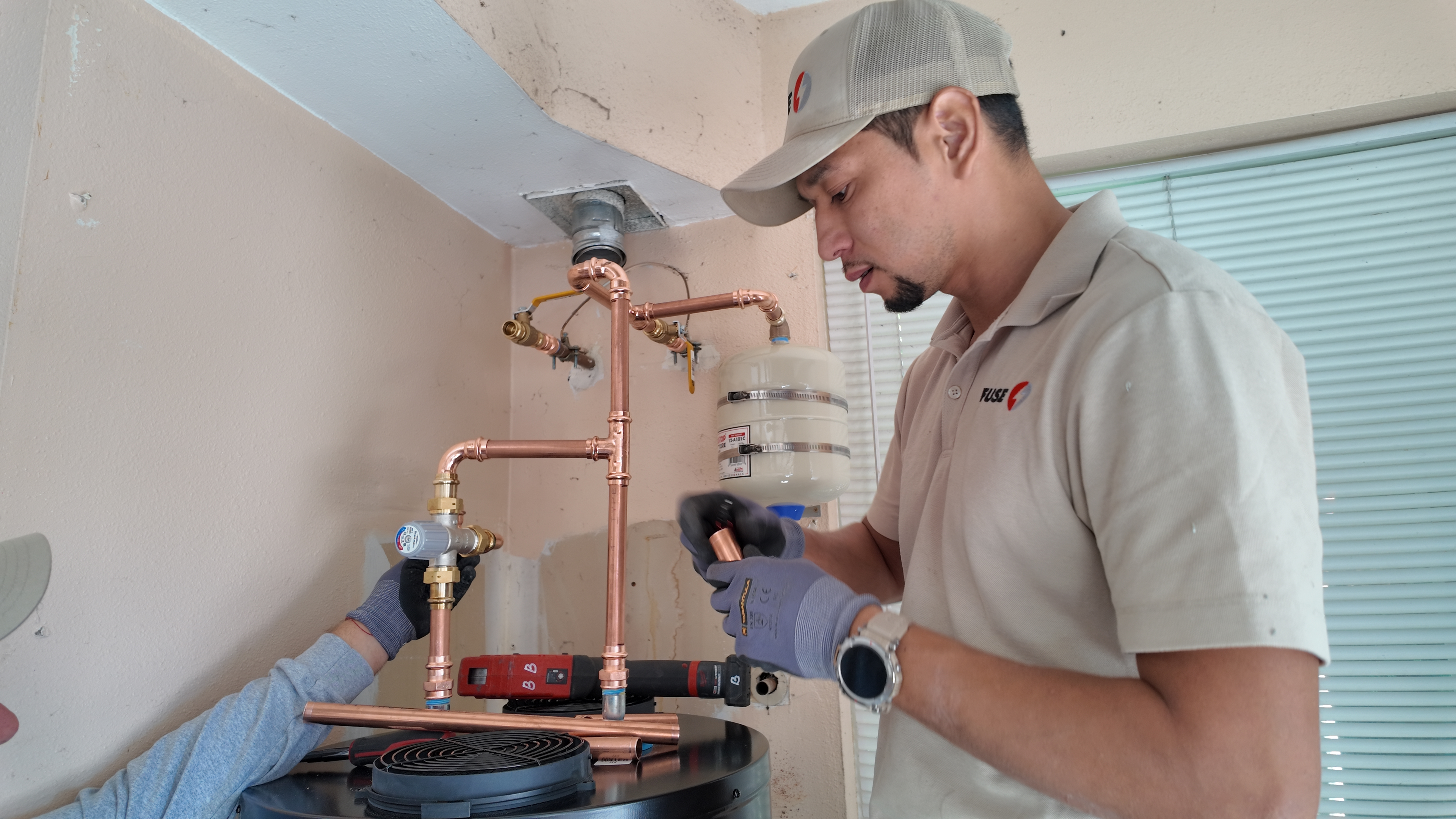
Two houses the same size can get wildly different quotes. It almost always comes down to what’s actually inside the walls. A slab home with copper in decent shape doesn’t need much demolition. A crawl-space house with rusted-through galvanized pipe is a whole different job. You just can’t price that over the phone.” — Ben, a Fuse Service plumber who spends a good chunk of the year repiping houses across the Bay Area.
When Is a Whole-House Repipe Worth the Cost?
It’s usually worth it once low pressure, discoloration, or leaks start showing up in more than one part of the house. At that point, chasing individual repairs tends to cost more over a few years than just doing the whole thing at once and being done with it.
Homes built before the 1980s with galvanized steel are especially common candidates for a full replumbing house project, since that pipe corrodes from the inside and gradually chokes off water flow everywhere it runs. Anyone weighing a replumbing house decision usually notices the warning signs — pressure drops, rust-colored water, pinhole leaks — well before a plumber ever shows up to confirm it.
How to Reduce the Cost of Repiping
There are a few realistic ways to bring the number down without cutting corners on the actual work:
- Go with PEX instead of copper where local code allows it — both material and labor come in lower.
- Time it with a renovation that already has walls or floors open, so access costs overlap instead of stacking up twice.
- Get more than one quote. A plumbing repair service down the street can price labor very differently from a larger outfit across town.
- Bundle fixture upgrades into the same project instead of spreading them across separate service calls.
Planning a House Repipe? Start With a Plumbing Assessment
Ask ten plumbers how much does it cost to repipe a house and you’ll get ten different numbers — until someone actually shows up and looks. That walkthrough before replumbing house really matters. A plumber checking pipe material, water pressure, and any visible corrosion in person is really the only way to get past a guess and into a real quote.
That single visit is what turns a rough online range into a real quote for your house. Homeowners in the South Bay can start with San Jose plumbing services to get eyes on the actual plumbing before any work begins.