 by
by 
The National Electrical Code requires the bathroom GFCI outlet, so there’s no way around it. Water and electricity in the same room is a bad combination, and bathrooms are basically ground zero for that — wet floors, wet hands, a metal faucet right next to the plug. That’s exactly what a ground fault circuit interrupter is there to stop. So if the outlet next to your sink doesn’t have those little Test and press the GFCI outlet reset button, don’t panic. It might still be covered by a GFCI somewhere else on the same circuit.
| Question | Quick Answer |
| Is GFCI required in bathrooms? | Yes, under the National Electrical Code |
| Does every outlet need its own Test/Reset button? | No — one GFCI can protect several outlets |
| What amp rating is standard? | 15 or 20 amp, matched to the circuit |
| Can a breaker replace an outlet? | Yes, a GFCI breaker at the panel works too |
Are GFCI Outlets Required in Bathrooms?
Bathrooms got hit with mandatory GFCI rules back in the ’70s, and the codes have only gotten tighter since. It makes total sense. Standing water, wet hands, metal fixtures everywhere — a shock in a bathroom is just a different thing than one in, for example, a living room.
So, are GFCI outlets required in bathrooms? The Electrical Safety Foundation International puts bathrooms on its list of wet locations where GFCI protection is mandatory. Their reasoning comes down to speed: a GFCI watches the current flow. And the moment it senses current leaking somewhere it shouldn’t, it cuts power, usually in a fraction of a second. It is fast enough to stop a shock before it turns fatal, which is the whole point behind GFCI required in bathroom spaces.
People mix up two things constantly, so let’s untangle them. GFCI protection is the safety function itself, the monitoring and shutoff working together. A GFCI outlet is just one way to deliver that protection, the version with the small “Test” and “Reset” buttons on the front. Plenty of outlets have full protection without ever showing you a button like that. More on how in a minute.
Where Should a Bathroom GFCI Outlet Be Installed?
Placement of GFCI outlets in bathrooms isn’t random here. The National Electrical Code lays out rules for both location and distance. Most of them boil down to one goal: keep outlets away from direct water contact.
Outlets Near the Sink or Vanity
This is where most bathroom GFCI outlet requirements actually apply. Vanity outlets need to be close enough for a hair dryer to reach. But make sure they are far enough to dodge direct splashes. For double vanities, you usually just see one outlet shared right in the middle.
One Outlet, Multiple Protected Outlets
A lot of homeowners assume every receptacle needs its own GFCI outlet bathroom code compliance to pass inspection. But in fact it’s not true. One GFCI outlet can protect every other outlet downstream on the same circuit, even in another room. That single Test/Reset outlet by the sink could be quietly covering the one by the toilet or out in the hallway. Once you get the hang of basic electrical outlet types, this kind of wiring clicks pretty fast.
How to Tell If Your Bathroom Outlet Is GFCI Protected
Not sure if your bathroom outlet is protected? A few quick checks will tell you before you start assuming the worst.
Look for the Buttons
See a small “Test” and “Reset” button built into the face of the outlet? That one’s doing its own protecting. It’s the easiest case.
Check Other Outlets on the Same Circuit
Sometimes the bathroom outlet looks totally plain, but a GFCI somewhere else in the house is covering it. Try pressing “Test” on nearby GFCI outlets. Don’t forget even about the ones in the garage or kitchen! Then just see whether your bathroom outlet loses power too.
Check the Electrical Panel
Some homes skip the outlet-style GFCI altogether and use a GFCI breaker instead. In that setup, the protection lives entirely at the electrical panel, and the bathroom outlet looks completely ordinary. If your panel is labeled by room, that alone can confirm it without opening a single cover.
Older Bathroom Without GFCI Protection
GFCI outlets in bathrooms became standard later than some of the houses even appeared. Sometimes our techs still see no GFCI outlet in bathroom situations. It happens very often, especially in houses where nothing electrical has been touched since the outlet went in.
If you’ve run through every check above and still can’t confirm protection, just treat the outlet as unprotected. An old bathroom outlet with no GFCI anywhere on its circuit is a real shock risk. It’s usually one of the cheaper fixes an electrician makes on a routine visit.
Common Bathroom GFCI Outlet Problems
Do bathroom outlets need to be GFCI? Now we know for sure: yes, definitely. But here’s another problem. GFCI outlets hold up well, but they wear out eventually. That’s why sometimes they trip for reasons that aren’t always obvious at first glance.
The Outlet Won’t Reset
If pressing “Reset” does absolutely nothing, the outlet itself has probably failed internally. GFCI outlets don’t last forever, and after enough trip cycles, the internal mechanism can just stop resetting, even with perfectly good wiring behind it.
It Trips Repeatedly
Tripping over and over for no clear reason usually points to moisture in the outlet box, a failing appliance plugged in, or wear in the outlet’s own sensor. A hair dryer or curling iron with a frayed cord is a frequent offender.
No Power at All, Even After Reset
If the outlet is flat-out dead and resetting doesn’t change anything, the problem is probably upstream. Think tripped breaker, a loose wire, or a failed connection somewhere else along the circuit.
The Test Button Doesn’t Trip It
If pressing “Test” doesn’t cut the power, the GFCI protection itself may have quit working, even though the outlet still delivers electricity like normal. It’s one of the more overlooked bathroom GFCI outlet problems, mostly because the outlet still “works” fine for charging a phone or running a fan.
What Type or Amp GFCI Do You Need for a Bathroom?
Amperage depends on the circuit the outlet is wired into, not just personal preference.
| Circuit Type | Typical Amp GFCI for Bathroom |
| Standard bathroom receptacle circuit | 20 amp |
| Shared lighting and outlet circuit | 15 amp |
| Dedicated appliance circuit (e.g., heater) | 20 amp, sometimes 30 amp |
Most modern bathrooms run on a dedicated 20-amp circuit. Why? Simply because it gives enough headroom for hair dryers and other higher-draw devices without nuisance tripping. Mixing amp ratings incorrectly is a mismatch worth having checked. So keep in mind that putting a 15-amp GFCI on a 20-amp circuit is a very bad and dangerous idea.
When to Call an Electrician for a Bathroom GFCI Outlet
Some GFCI issues are a five-minute reset. Others point to wiring problems that shouldn’t wait. Call an electrician if:
- The outlet won’t reset no matter how many times you try
- You smell burning or see scorch marks around the outlet
- The outlet trips constantly with nothing obviously plugged in
- Your bathroom has no visible GFCI protection and testing can’t confirm any upstream
- You’re renovating and need outlets relocated to meet current bathroom outlet code
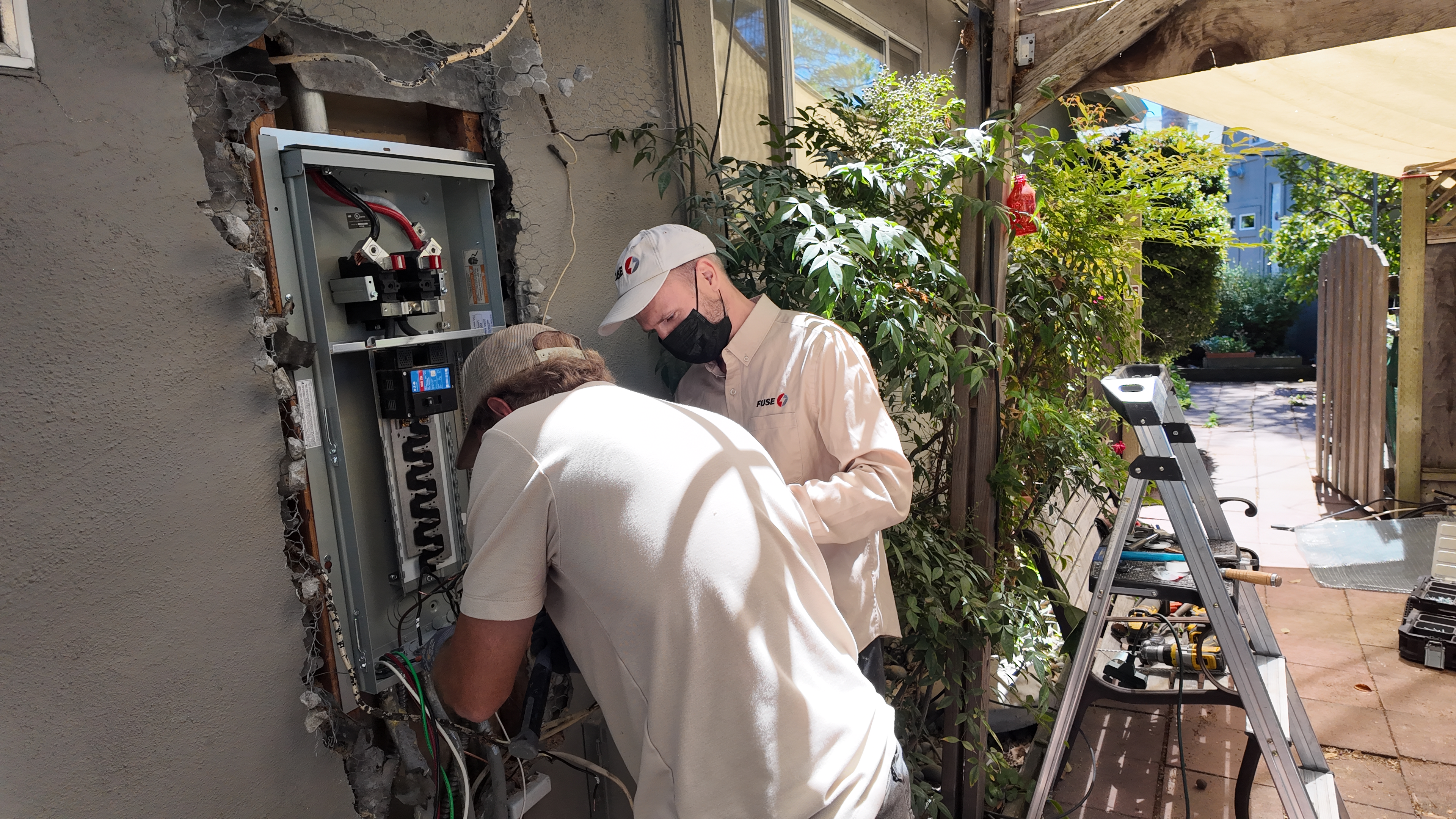
A qualified residential electrician can trace the circuit, confirm what’s actually protecting the outlet, and fix wiring issues that a homeowner can’t safely diagnose alone. If you’re in the South Bay, an electrician in San Jose can usually get to a bathroom GFCI issue same-day, since it’s one of the more common service calls electricians handle. For anything beyond a simple swap, electrical repair in San Jose covers panel-level fixes too.
“I see lots of homeowners assume a tripped GFCI means the outlet is broken. More often, it’s doing exactly what it’s designed to do — shutting off power because it detected something it didn’t like. Chasing down why it tripped matters more than just resetting it and moving on.” — Nick, an electrician at the Fuse Service team.
The NFPA describes the National Electrical Code as the baseline for safe electrical design and installation across the country, and notes that it’s the framework adopted in all 50 states. That said, local bathroom GFCI code and adopted NEC bathroom GFCI requirements may vary by city and county, so a bathroom that’s fully compliant in one area could need adjustments in another. If you want the technical side of how the protection itself functions, our page on how GFCI outlets work breaks down the mechanism in more detail.