 by
by 
If you’ve got low water pressure in kitchen sink faucets, chances are it’s one of four things. It may be a clogged aerator or a worn cartridge. Sometimes it’s a shut-off valve that got bumped closed or a supply line with a kink in it somewhere under the cabinet. Check the aerator first. It takes two minutes and may solve the problem almost instantly.
| Symptom | Likely Cause | First Step |
| Weak flow, both hot and cold | Clogged mesh aerator | Unscrew the aerator and rinse out the screen |
| Sudden drop after plumbing work | Loose debris or scale in the line | Flush the supply line into a bucket |
| Low pressure on the hot side only | Sediment in the water heater or a kinked hot line | Check the hot water shut-off valve and tank |
| Weak flow across the whole kitchen | Partially closed shut-off valve | Turn both valves fully counterclockwise |
Let’s Find Out Where the Pressure Issue Hides
Before you grab a wrench, go check another faucet. The bathroom sink works fine for this, as well as the tub. Now, our next step is to turn it on and wait for a couple of seconds. Comes out strong? Then your main line’s fine and the problem is sitting somewhere inside the kitchen fixture itself.
Low Water Pressure in the Kitchen Sink Only
Low water pressure in kitchen sink only is actually better than any other pressure problem. Every other tap in the house runs normal, so the main line and the municipal supply are both off the hook right away.
What does it mean? If you’re dealing with low water pressure in kitchen sink and only there, don’t call the water company. First, look under the sink instead and try to inspect the aerator, the cartridge, the supply lines, and the shut-off valves. It’s one of those four almost every time.
Low Water Pressure Throughout the House
If your shower is weak too, then you’re dealing with something else entirely. When every fixture in the house struggles at once, it usually means a failing pressure reducing valve, a leak hiding somewhere in the main line, or a temporary dip coming straight from the municipal supply.
What Causes Low Water Pressure in the Kitchen Sink?
Trying to pin down what causes low water pressure in kitchen sink trouble doesn’t usually mean opening up a wall. It’s a short list, and most plumbers will tell you the same two or three things show up again and again. Work down through these in order.
A Clogged Faucet Aerator
Out of everything on this list, this one causes the most service calls, by far. That mesh screen at the tip of the faucet works like a trap door for whatever’s floating around in your water: sand, rust flecks, flakes of mineral scale. Hard water speeds this up considerably. Sometimes a brand-new faucet needs its first aerator cleaning within a year.
A Dirty or Worn Faucet Cartridge
The faucet cartridge inside your faucet is what mixes hot and cold before either one reaches the spout. Over time, tiny mineral deposits or fragments of a worn rubber seal can build up inside. You’ll notice the drop right away once that happens, even if everything else checks out fine.
Partially Closed Shut-Off Valves Under the Sink
You’d be amazed how often this is the whole problem. Somebody’s under the cabinet fixing the garbage disposal, or swapping out a filter, and they bump the valve handle without noticing. A partially closed shut-off valve doesn’t need much of a turn to choke your flow. A quarter turn will do it. Not exactly a dramatic fix, but it works.
Kinked or Clogged Water Supply Lines
Those flexible lines connecting the wall to your faucet kink easily, especially after a DIY project, or from being crammed into a cabinet that’s already packed with cleaning supplies. Picture a garden hose someone stepped on. Water still gets through a bent supply line, just barely. Open the cabinet doors and see if both lines run straight.
Pull-Down Sprayer or Hose Filter Problems
Almost nobody knows this exists. There’s a small screen filter tucked right where the hose connects to the spray head on most pull-down faucets, and it catches the fine sediment that slips past the main aerator. It clogs on its own over time, quietly, and it’s one of the most overlooked sources of low water pressure kitchen sink complaints out there.
Hidden Leaks or Corroded Pipes
Sometimes the problem hides in the leak behind the wall and literally steals pressure long before water ever gets close to your spout. Older galvanized pipes are bad about this. They rust on the inside as they age, and that rough, corroded surface catches debris every time water tries to push past it.
Pressure Regulator or Municipal Water Supply Issues
Your house runs on a steady feed coming in from the municipal supply, and when the PRV starts failing, the whole system gets thrown off. Utility repairs down the street, a water main break, scheduled maintenance work. Any of these can drop your pressure for hours. None of it has a thing to do with your faucet hardware.
How to Fix Low Water Pressure in a Kitchen Sink
Fixing this one doesn’t call for much. Set aside about ten minutes and keep an adjustable wrench within reach. The next step is just to follow the steps one by one. The process is simpler than most people expect. No reason to do all four if the first one turns out to be the answer.
Step 1: Clean the Aerator
Most aerators twist off by hand, no tools needed. Stuck on there? Throw a rag around it before reaching for pliers so you don’t chew up the finish underneath. Drop the little screen into a cup of white vinegar and just leave it alone for twenty minutes or so. Rinse, thread it back on, and you’re finished.
Step 2: Check the Shut-Off Valves
Grab a flashlight and get down under the cabinet. Both valves should be turned counterclockwise, all the way. Sounds too simple to actually be the fix, but a valve someone bumped by accident shows up behind more of these calls than you’d guess.
Step 3: Inspect the Supply Lines
Unhook one line and aim it into a bucket instead of down the drain. Good, strong pressure there tells you something useful: the faucet itself is the problem, not whatever’s feeding water in from the wall.
Step 4: Examine the Cartridge
This one takes a little longer. Pop the handle off, slide the cartridge out, and actually look at the seals instead of just glancing at them. Grit or scale sitting on there? Rinse it clean. Gaskets torn or cracked? Skip the cleaning altogether and just put in a new cartridge.
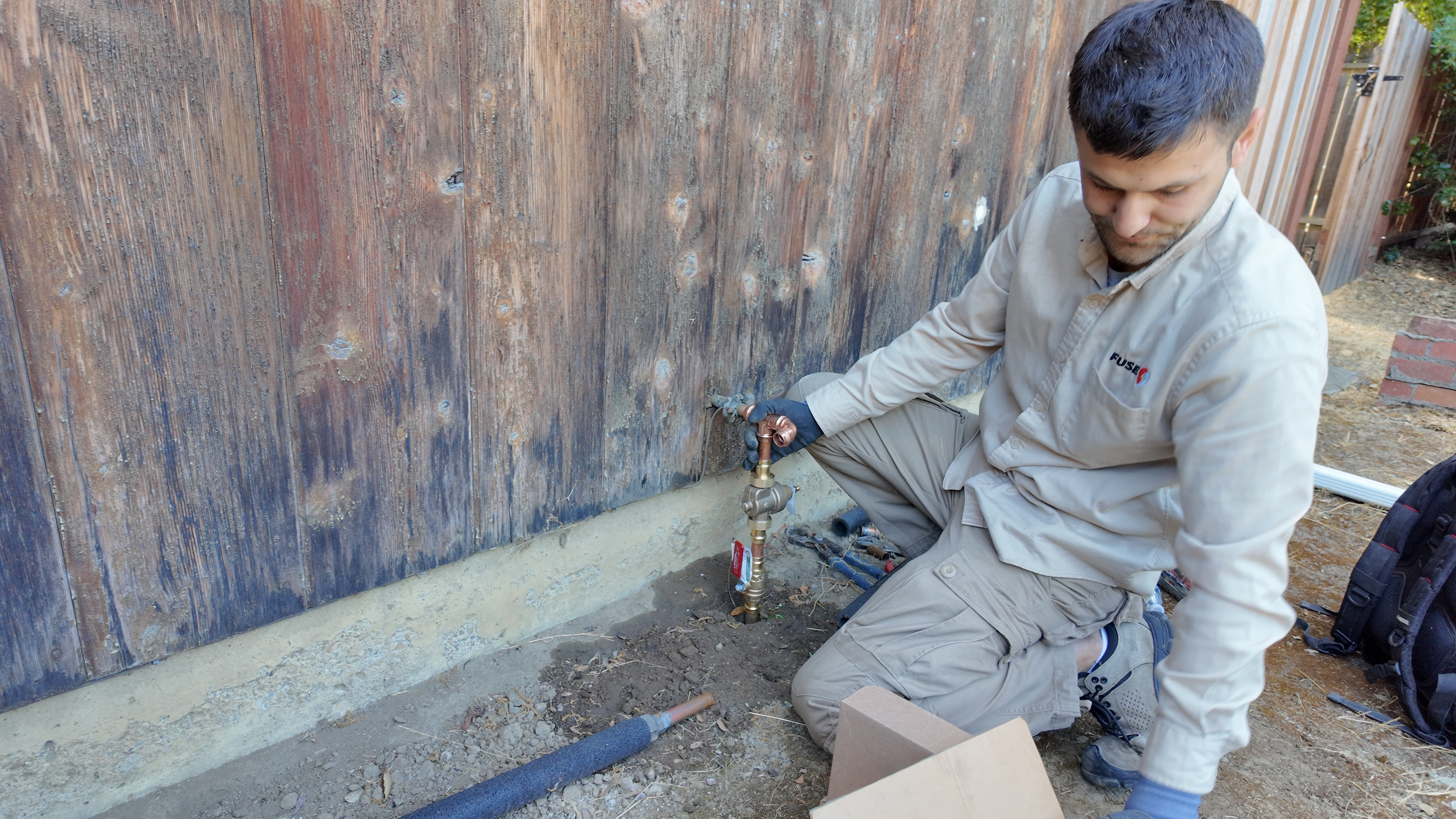
“Take a photo before you disassemble anything. A Moen cartridge and a Delta cartridge look close enough to fool you at a glance, but they’re not interchangeable, and a reference photo on your phone beats a second trip to the hardware store.” — Ben, a professional plumber at the Fuse Service team.
What If Only the Hot Water Pressure Is Low?
When kitchen sink water pressure low symptoms only show up on the hot side, your cold water plumbing isn’t the issue at all. Something specific to the hot water path is causing it. Could be the line, could be the cartridge, could be the water heater.
Step 1: Verify the Hot Side Valve
Make sure the hot water shut-off valve is open all the way and the line isn’t kinked. A bent hot line can throttle your flow on its own, no other cause needed.
Step 2: Check the Cartridge Inlet
Pop the cartridge out and check the hot side specifically for scale or a gasket that’s seen better days. Heat speeds up mineral deposit, so the hot side always scales faster than the cold ever will.
Step 3: Check Your Water Heater
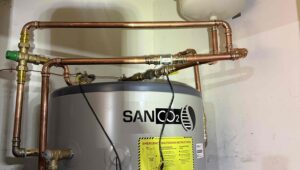
Take a look at the shut-off valve on the tank itself. If nobody’s flushed it in the last year or so, that’s probably part of your problem right there.
What If the Kitchen Sink Suddenly Lost Water Pressure?
If your kitchen sink lost water pressure all of a sudden, gradual wear probably isn’t the culprit. Something mechanical just happened. A piece of loose pipe scale can break free and lodge itself in a narrow opening, and your flow drops in seconds. One minute it’s normal, the next it isn’t.
Kitchen sink low water pressure that comes out of nowhere sometimes ties back to a nearby water main break, or emergency repair work happening down the block. Check your city’s alert page, or ask around, before you assume the problem starts inside your own walls.
| Sudden Drop Scenario | What to Check |
| No water anywhere in the house | Main valve position and municipal supply alerts |
| Happened right after nearby construction | Flush the lines and clean the aerator of grit |
| Rattling noise inside the wall pipes | Look for a stuck or failing PRV |
| Started right after replacing the faucet | Loose flux or tape debris trapped in the new aerator |
When Low Kitchen Sink Pressure Needs a Plumber
A rag and some vinegar won’t fix every case of low water pressure in kitchen sink plumbing. If you’ve cleaned the aerator, opened the valves, checked the lines, and you’re still stuck with no water pressure in kitchen sink fixtures, something bigger is probably going on underneath all of it.
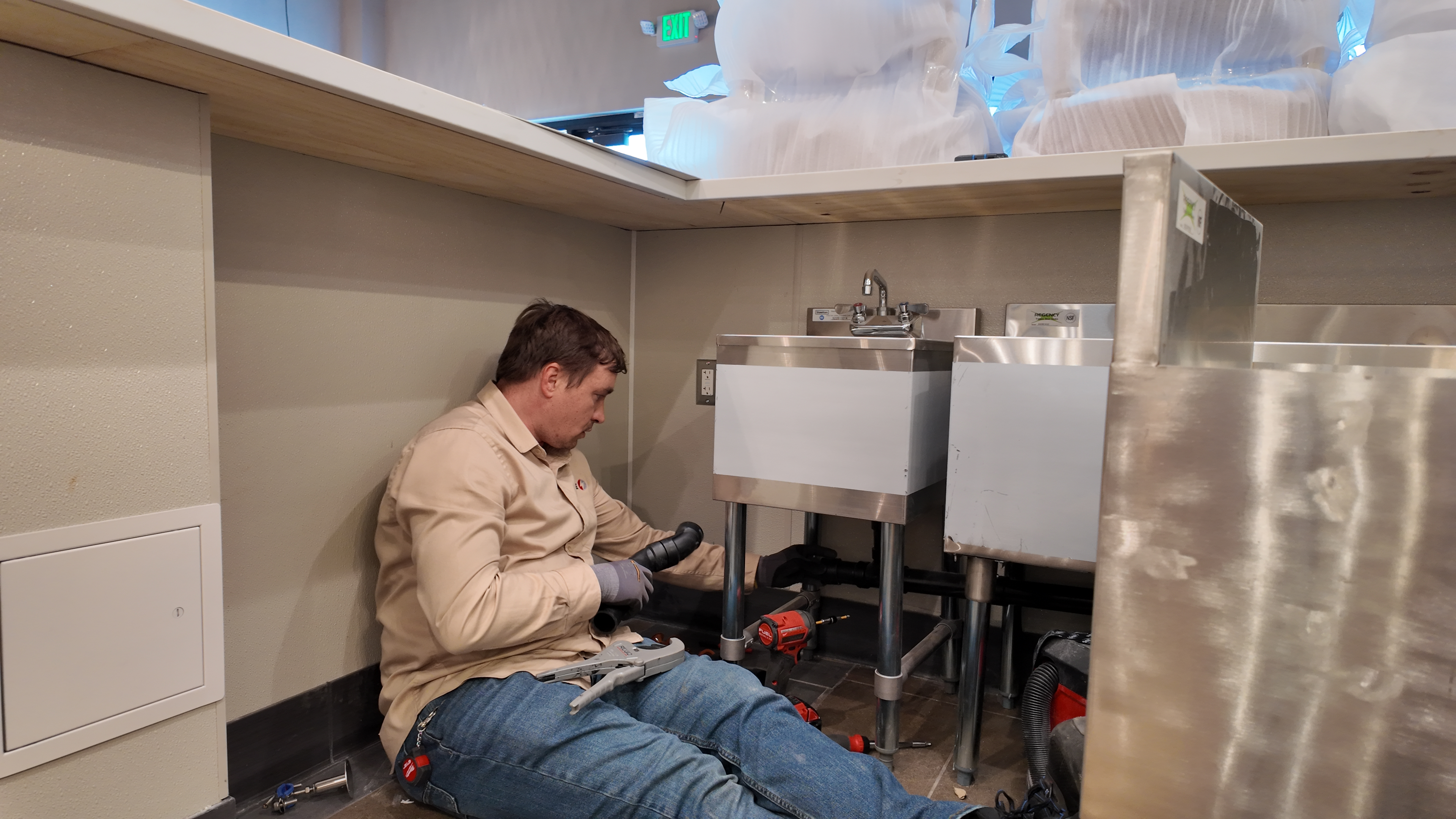
A suspected leak behind a wall, or under the floor, isn’t a weekend job. Tracking it down without the right equipment often means cutting into drywall that never needed to come down in the first place. That’s the point where calling a licensed plumbing repair company makes sense, since they can pinpoint the source through pressure testing instead of guessing. If the leak’s underground, a proper water pipe repair service traces it and fixes it without tearing up your whole yard. And if a failing water heater turns out to be behind it, water heater repair in San Jose gets things flowing normally again.
Most people who end up searching for plumbers in San Jose only get there after ruling out the easy stuff first. Which, honestly, is the right order to do things in.
How to Prevent Low Water Pressure at the Kitchen Sink
Routine upkeep goes further than most people expect here. The EPA notes that a standard kitchen faucet under the WaterSense program tops out at 2.2 gallons per minute at 60 PSI, so don’t expect a fire hose even from a faucet in perfect shape. A steady, consistent stream is really the goal.
- Give the aerator a clean every six months or so. A soft crust of mineral buildup is a lot easier to deal with than a hardened one.
- A water heater flush once a year keeps sediment from ever reaching your kitchen supply line in the first place.
- Hard water in your area? A water softener usually pays for itself, since it keeps the cartridge and supply lines from wearing out early.
- Check your main valve now and then. The whole house is running weak? Our guide on how to increase water pressure walks through it properly, instead of just cranking a valve and hoping for the best.