 by
by 
What does a condensate drain pan actually do? It catches the moisture that builds up on the evaporator coil and sends it down into the condensate drain line, so water never gets the chance to reach the unit. Miss that step, or let it fail, and condensation starts dripping straight onto insulation or even wiring every time the system kicks on. That’s why a working AC drain pan matters more than most homeowners ever think.
What Is a Condensate Drain Pan?
Picture a shallow tray, metal or plastic, tucked right under the indoor unit. That’s the condensate drain pan. All it has to do is catch condensation before it hits the floor or anything else nearby. You’ll usually find it sitting directly beneath the evaporator coil, since that’s exactly where warm air dumps its moisture as it cools. A short pipe runs off the pan itself, the condensate drain line, and that’s what actually carries the water somewhere else.
Most split systems come with at least one condensate pan built in. A lot of attics or elevated air handlers get a second one added as backup. Left alone, an AC condensate drain pan honestly doesn’t need much thought. Trouble tends to start only once water stops being able to move past it.
How Does a Condensate Drain Pan Work?
It comes down to timing more than anything else. Air cools down, moisture condenses out of it, and that water has to go somewhere — usually through a condensate drain pan first. Let any one of those stages lag behind, and an air conditioner drain pan can overflow before anybody even notices something’s off.
Moisture Condenses on the Evaporator Coil
It all starts at the evaporator coil. Warm air from inside the house passes over cold refrigerant lines, and whatever moisture that air was carrying turns into droplets — not unlike what happens on a glass of ice water left out on a humid afternoon. The muggier the day, the more water this one step ends up producing.
Water Drips Into the Primary Drain Pan
Those droplets fall straight down into the primary pan mounted right beneath the coil. During a long run of continuous cooling, several gallons can pass through without anything actually being wrong.
The Drain Pan Sends Water Into the Condensate Line
From there, water leaves through an opening tied into the condensate drain line, typically a short stretch of PVC pipe. Depending on the setup, that line either sends water straight outside, into a household drain. Or — when gravity isn’t enough on its own — it goes through a condensate pump.
Primary vs. Secondary Condensate Drain Pan: What’s the Difference?
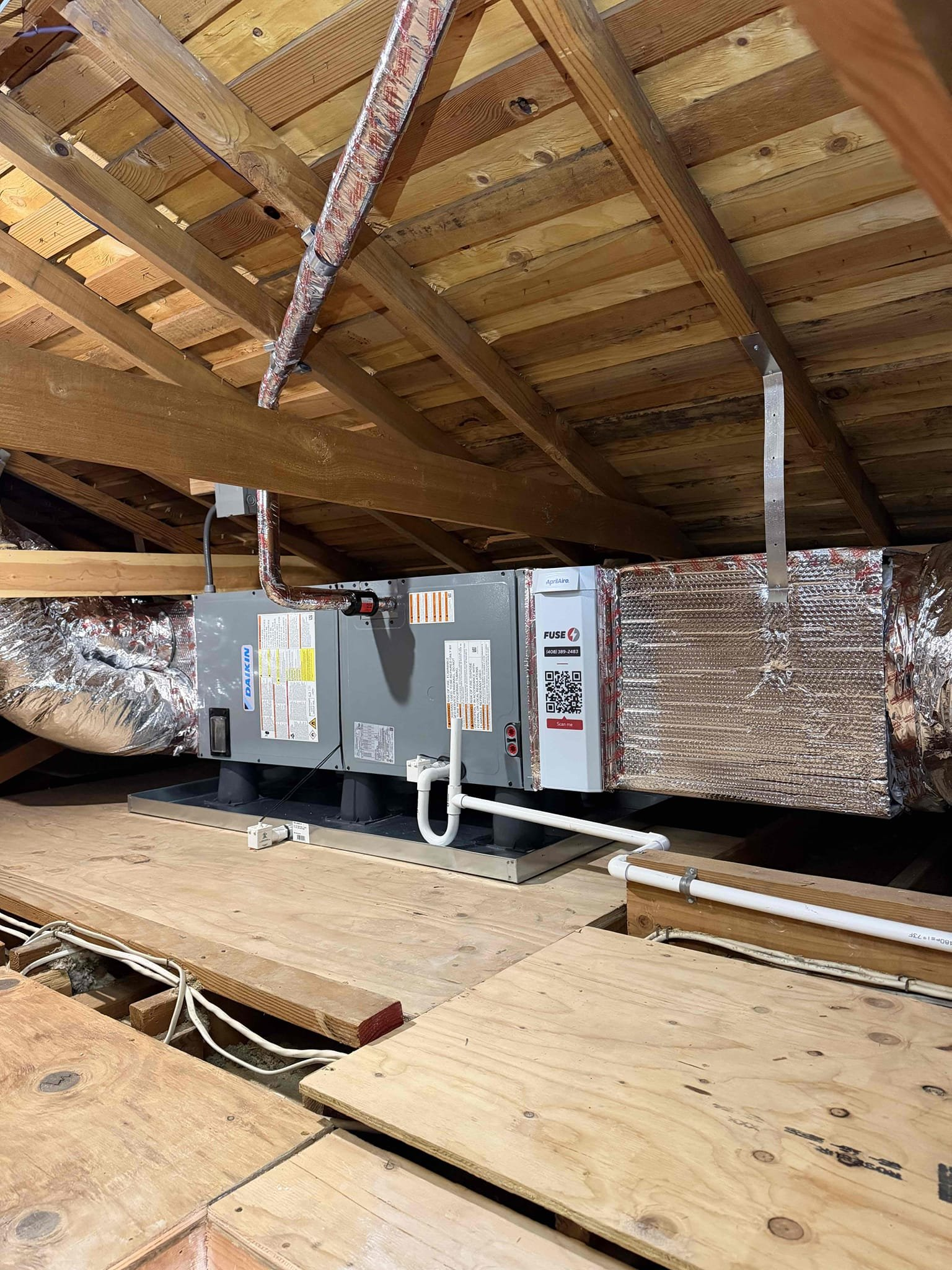
A primary drain pan handles condensate under normal, everyday operation. A secondary drain pan is there for one reason only: to catch things if the main drainage path ever fails. Installers tend to place that second pan wherever a leak would cause the most damage. This usually means above a bedroom rather than over a garage.
Quite a few secondary pans also come paired with a water-level detection switch, which shuts the whole system down the instant water shows up. It’s a small, inexpensive safeguard against a repair bill that’s anything but small. This isn’t just a manufacturer’s nicety, either — the California Mechanical Code requires secondary drainage protection in attic installations, and guidance from groups like ACCA and the U.S. Department of Energy points to the same setup as standard practice nationwide.
| Feature | Primary Drain Pan | Secondary Drain Pan |
| Location | Directly under the evaporator coil | Beneath the air handler, often in the attic |
| Purpose | Collects condensate during normal operation | Catches overflow if the primary line fails |
| Drainage | Connects to the main condensate line | Often tied to a separate drain or float switch |
| Water presence | Some flow during operation is expected | Water here signals trouble upstream |
| When to worry | Standing water or overflow | Any water at all showing up in this pan |
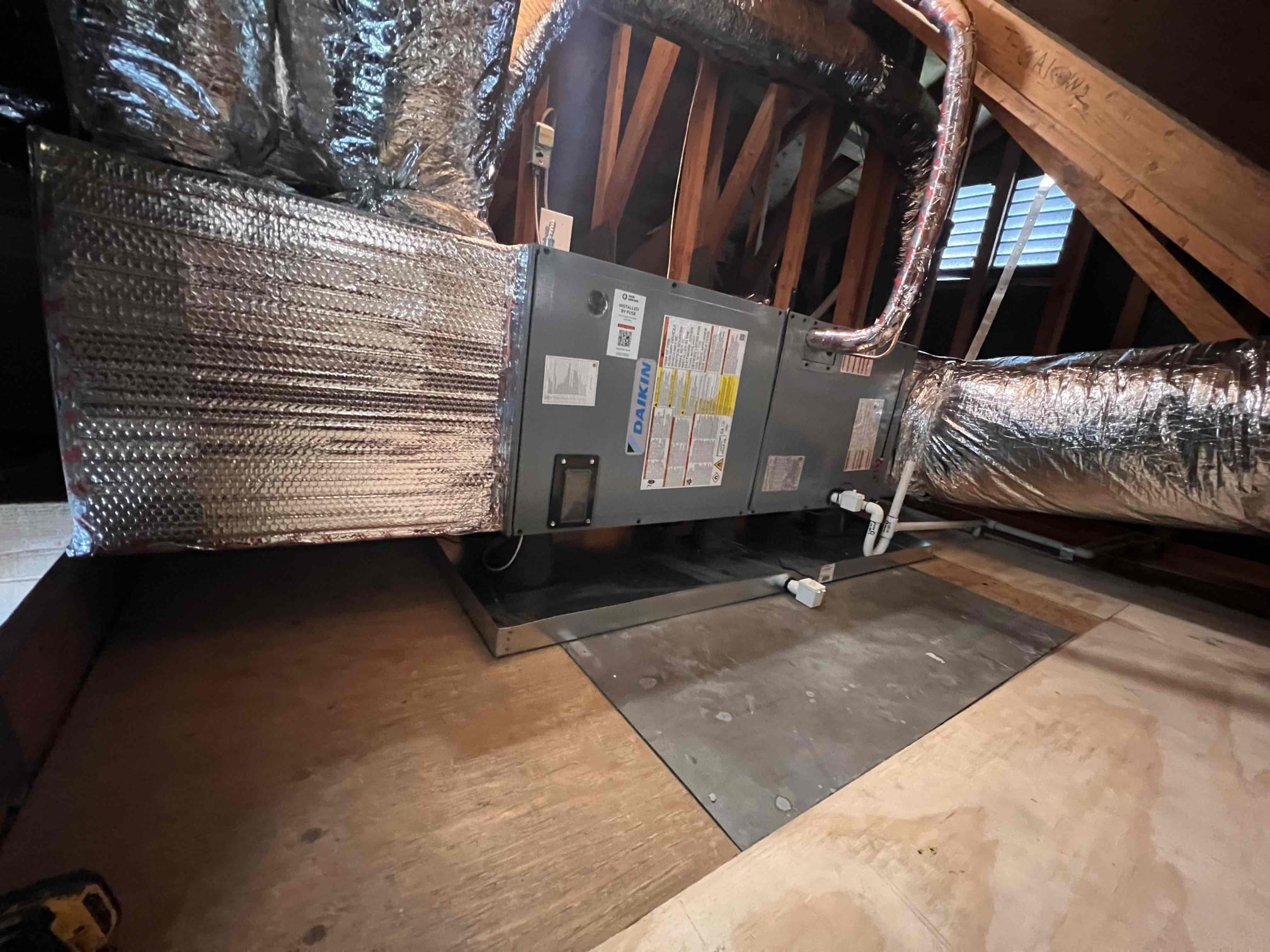
A secondary pan is supposed to stay bone dry. So if water ever turns up in it, that’s rarely about the pan itself — something further up the chain has already gone wrong.
Where Is the Condensate Drain Pan Located?
The AC drain pan location really comes down to how the system was set up in the first place. Though usually the pan sits directly beneath the air handler — inside a utility closet, up in the attic, out in the garage, or tucked in the basement. If a unit runs horizontally through an attic, the pan is usually right there, visible under the housing.
In apartments and smaller homes, the air handler often ends up crammed into a closet next to the water heater. That actually makes the pan easier to spot, since it sits exactly where the drain pipe heads off toward a nearby drain or an exterior wall.
Where the pan sits also changes how fast a problem shows itself. In hot, humid regions, systems run longer hours and push more water through the pan overall. So, a clog or a crack tends to surface sooner than it would somewhere drier. Homeowners dealing with that kind of climate can find more region-specific troubleshooting in HVAC repair in San Jose.
Why Is My AC Drain Pan Full of Water?
An AC drain pan full of water is almost never a sign that the condensate drain pan has broken on its own — it usually means something downstream is blocking the water’s path. Four causes come up over and over, and none of them get fixed the same way.
The Condensate Drain Line Is Clogged
Mold and general debris build up inside the pipe over months and years, and eventually there’s nowhere left for water to go. This is by far the most common reason for water in AC drain pan setups — the clog just cuts the exit route off completely.
The Evaporator Coil Has Frozen
When the coil freezes up, usually from low refrigerant or weak airflow, and then thaws back out, a wave of water hits the pan all at once — way more than it’s designed to handle in a single burst. From the outside, it looks like any other overflow.
The Drain Pan Is Cracked or Corroded
Older metal pans rust as the years go by. Plastic ones grow brittle and crack from constant temperature swings. Here, water can appear even with no clog anywhere in sight, seeping out through gaps in the pan itself instead.
The Condensate Pump Is Not Working
Systems installed below the natural drain point rely on a condensate pump to lift water up and out. Let that pump fail, whether from a worn part or a power surge, and water simply stops moving — it just piles up in the pan instead.
Signs Your AC Drain Pan or Drain Line Needs Attention
Some warning signs show up in a blink of an eye. Others creep in slowly, over weeks, and it’s easy to miss them. Glancing at the drain pan every so often is usually enough to catch trouble early.
| Symptom | Likely Cause | Urgency |
| Musty smell near the air handler | Algae or mold buildup in the drain line | Moderate — schedule a cleaning soon |
| Water stains on the ceiling below an attic unit | Overflow from a clogged or cracked pan | High — call a technician promptly |
| System shuts off on its own | Float switch triggered by rising water | High — don’t ignore this warning |
| Standing water visible in the secondary pan | Failure somewhere in the primary drainage path | High — needs inspection right away |
| Reduced cooling with ice on the coil | Frozen evaporator coil | Moderate to high, depending on the cause |
| Slow drip instead of a steady flow | Partial clog forming in the drain line | Low to moderate — worth monitoring |
How to Clean an AC Drain Pan
Turn Off the System First
Cut the power before touching anything. It’s a small step, but it takes shock risk off the table and keeps the fan from kicking on while you’re mid-cleaning.
Wipe Down the Pan
Clear off any visible dust or debris with a soft cloth. Then go over the pan with a water-and-vinegar mix — it slows down mold and algae without needing anything harsh.
Check the Drain Opening
Take a look at the opening leading into the drain line and make sure nothing’s blocking it. If a clog sits deeper than you can see or comfortably reach, leave it alone rather than forcing anything.
For anything beyond that surface-level cleaning — the line itself, or the pump — there’s a full walkthrough in how to clean a condensate pump that covers each step. Pairing that with a regular HVAC maintenance checklist tends to catch buildup long before it becomes a real repair.
When Should a Condensate Drain Pan Be Replaced?
Once a pan starts showing rust, cracks, or a leak that keeps returning even after the line’s been cleared, it’s usually time to swap it out. Plastic pans get brittle with age and crack under equipment vibration; metal ones corrode from the inside, often somewhere you’d never spot just by glancing at it from outside.
If a leak won’t quit and both the line and the pump have already checked out fine, odds are good the pan itself is the actual source. Replacing an HVAC condensate drain pan isn’t some rare, unusual repair. It happens fairly often once equipment crosses the 10-to-12-year mark.
Fitting a new air conditioner drain pan that actually matches the air handler is trickier than it sounds, and sizing mistakes happen more than people expect. That’s usually a job worth handing to a professional. Calling in professional AC repair means the whole drainage path gets checked at the same time, not just the one part.
“Water sitting in a pan doesn’t automatically mean the pan itself is the problem. We start by tracing where that water is actually coming from. If the outside of the pan stays dry but water keeps showing up inside it, that’s usually a clog in the line — not a cracked pan. A cracked pan tends to leave damp marks along the edges of the housing, not just inside the tray. A frozen coil tells a completely different story: ice builds first, then a rush of water shows up once it thaws. None of that is obvious just by looking. That’s why we always work through the whole chain — coil, pan, line, pump — before we ever recommend replacing anything.” — Alex, the HVAC installer at the Fuse Service team.