 by
by 
Grounding is really something that the whole 2 prong vs 3 prong outlet debate comes down to. A 3-prong outlet normally has a separate grounding conductor, meanwhile a standard 2-prong one simply doesn’t have one. Visually, the difference is almost invisible. Yet it determines where the current will flow in the event of an insulation failure: into the ground or into the person holding the appliance at that moment.
| Feature | 2-Prong Outlet | 3-Prong Outlet |
| Grounding | No | Yes, through the equipment grounding conductor |
| When they were installed | For the most part, until the early 1960s | Mostly since the 1960s, following the tightening of requirements for receptacles |
| Compatibility with plugs | Only two-pin | Both types, including grounded devices |
| Response to fault current | If the current is weak, it may look for another path | Rapid current diversion in the branch circuit and the electrical panel |
| Typical load | Lamps, chargers, small appliances | Computers, washing machines, microwaves, tools |
2-Prong vs. 3-Prong Outlet: What’s the Difference?
You can spot it right away, actually — a 2-prong outlet has only those two vertical slots, and a 3-prong one adds a round hole underneath. That round one’s the ground. Inside, the design is even simpler: both types have a live wire and a neutral wire, but only the three-prong model provides a path for fault current.
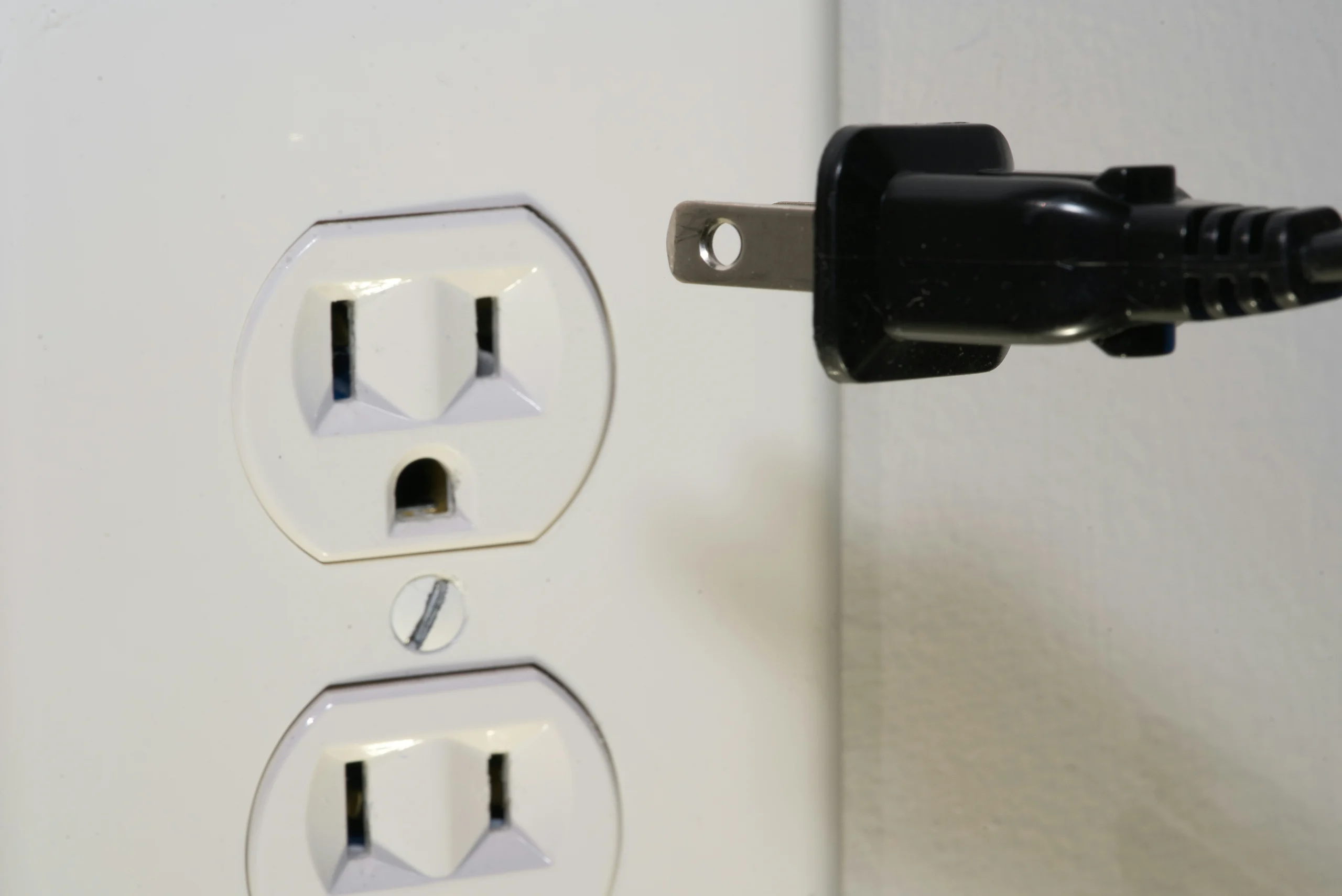
Two-prong outlets are basically a holdover from homes built before grounding became a mandatory requirement of the electrical code. Over time, the National Electrical Code began requiring grounding in most residential circuits, and manufacturers switched to a design with a third prong. General principles of grounding — from the perspective of worker and resident safety — are described in detail in OSHA — grounding principles and receptacle requirements.
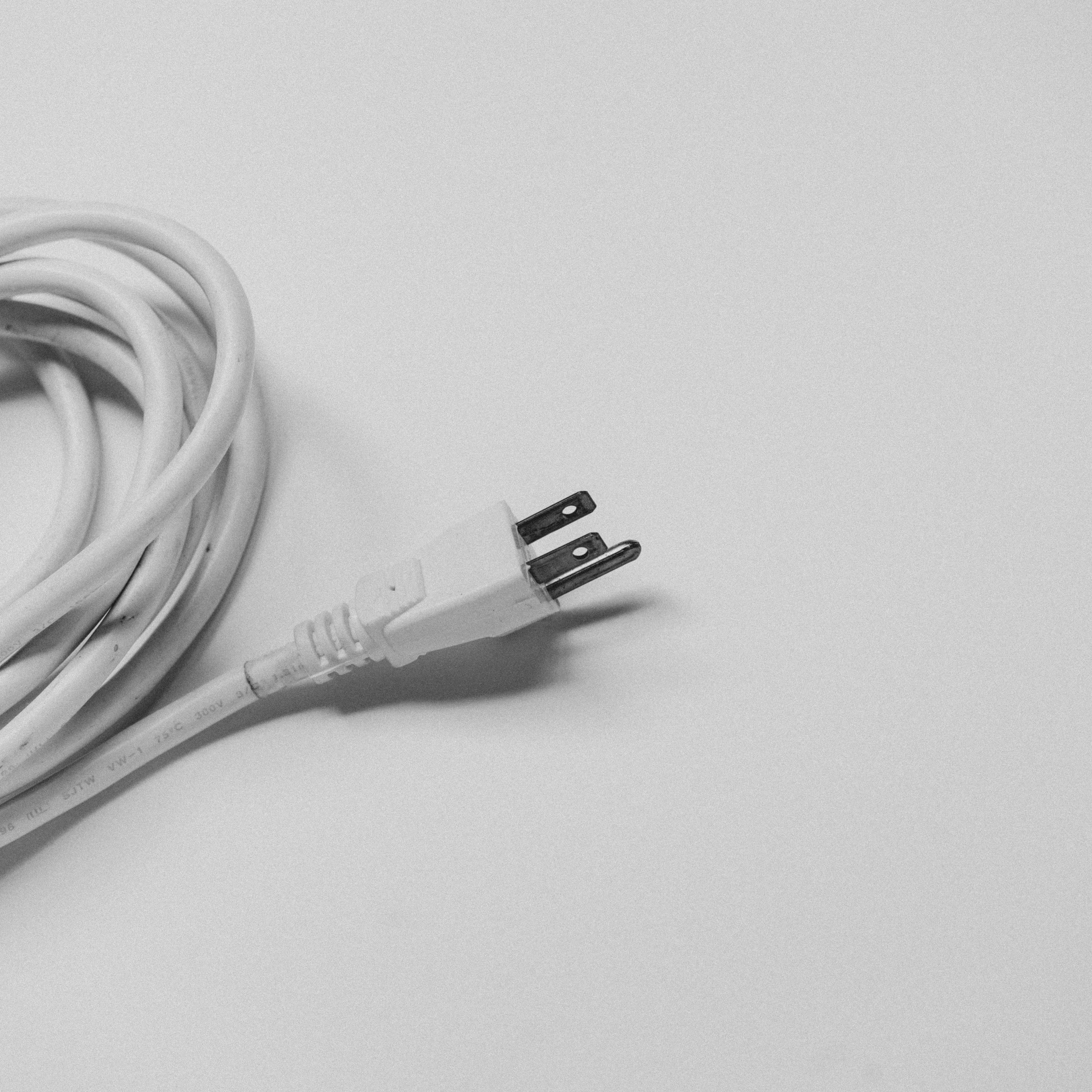
Are 3-Prong Outlets Safer Than 2-Prong Outlets?
Yes, but only if the ground connection is actually routed to the electrical panel and doesn’t end with a dead wire behind the wall. Good grounding is what makes the difference between “well, looks safe” and “is actually safe.”
When the insulation in an appliance with a metal housing fails, the live wire can accidentally come into contact with the housing. If there is a ground connection, most of the current flows along the path of least resistance. It goes back to the electrical panel via the equipment grounding conductor, rather than through a person. Without a ground connection, that path simply doesn’t exist.
It’s important to understand that the shape of a three-prong outlet alone guarantees nothing. In some older homes, owners have replaced outlets with three-prong ones without actually connecting them to ground. You can’t tell the difference just by looking at them.
Why Do Some Homes Still Have 2-Prong Outlets?
Usually it’s just an old house. The wiring went in decades ago and nobody’s touched it since — the outlet still works, nothing sparks, so why bother.
Partial remodels are another common reason. Maybe the kitchen got redone at some point, or the bathroom, with newer outlets going in — but nobody touched the bedrooms or the hallway. So now the house is running on two different standards at once, part of it current, part of it stuck somewhere around 1965.
Other times there’s no real reason at all — it just never came up. Then a computer plug doesn’t fit, or the breaker starts tripping for no clear reason, or there’s that faint burnt smell near an outlet, and suddenly someone’s looking into what it’d actually take to upgrade an older electrical system.
Can You Plug a 3-Prong Plug Into a 2-Prong Outlet?
Not directly — they are simply not designed to fit together. That’s why there are adapters that physically allow you to plug a three-prong plug into a two-prong outlet.
But there’s a nuance here that’s often overlooked: the adapter itself doesn’t create a ground out of thin air. It only works when the metal socket box is actually grounded and there’s a screw to secure the adapter’s “eye” to the cover. In most older homes, this condition isn’t met. The adapter then becomes a convenient but, from a safety standpoint, useless piece of plastic.
A separate issue is 2 prong to 3 prong outlet adapters sold without any labeling regarding usage guidelines. You shouldn’t rely on them when plugging in a computer or other equipment with sensitive electronics.
Can You Replace a 2-Prong Outlet With a 3-Prong Outlet?
Yes, but the result depends heavily on what’s inside the wall. If there’s already a ground wire in the box, or if the box itself is made of metal and connected to the home’s grounding system, the outlet can be replaced with proper grounding.
If there is no grounding wire at all, there are two valid options. The first is to run a new grounding conductor from the box to the electrical panel. This usually requires opening up the walls. The second is to install a GFCI outlet with the mandatory “No Equipment Ground” label. This is permitted by code, although it does not provide true grounding.
The issue of replace 2 prong outlet with 3 prong outlet is rarely solved by a single purchase at a home improvement store. Here, you first need to assess the condition of the wiring, and this is precisely the kind of situation where it’s better to call in professionals rather than wing it.
“Two outlets may look exactly the same on the outside but have completely different wiring conditions behind the wall. It’s especially true for homes where renovations were done by different contractors over the course of several decades. You can only know this from experience without opening the junction box and taking measurements.” — Max, one of the electricians at Fuse Service team.

GFCI vs. Grounded 3-Prong Outlet: They Are Not the Same Thing
GFCIs and grounding serve different purposes, and confusing the two of them is a common mistake. A GFCI detects a current leak and cuts off the circuit in a fraction of a second, but grounding itself doesn’t happen as a result.
| Feature | Grounded 3-Prong Outlet | GFCI-Protected Ungrounded Outlet |
| Physical grounding | Yes | No |
| Protection against electric shock | Yes, by diverting the fault current | Yes, by using a ground fault sensor |
| Grounding of devices with metal housings | Full | No |
| Suitable for sensitive electronics | Yes | Limited |
| Required labeling | Not needed | «No Equipment Ground» |
Both options reduce the risk of electric shock, but proper grounding also protects the equipment itself — computers, routers, kitchen appliances… A GFCI doesn’t perform this function, as it only responds after a leak has already occurred.
When Should You Upgrade 2-Prong Outlets?
You Regularly Need to Use 3-Prong Appliances
If there’s always an adapter jammed into that outlet for the fridge or the washer, that’s not a minor annoyance anymore — it’s telling you the outlet needs to go.
The Outlet Is Loose, Warm, Discolored, or Damaged
A loose plug in the outlet, a panel that feels warm to the touch, and discoloration around the holes — all of these are signs of wear and tear that shouldn’t be dismissed as simply “an old outlet, but it still works.”
You Are Renovating an Older Home
A remodel is the natural window to upgrade an older electrical system as a whole, instead of swapping a few outlets and leaving everything else behind the walls untouched.
You Are Upgrading Other Parts of the Electrical System
If you’re already replacing the panel, adding branch circuits, or figuring out 120V vs. 240V outlets for something big like a dryer or an EV charger — that’s a good time to handle the old two-prong outlets too, so here the 2 prong vs 3 prong plug choice is quite obvious. Saves you from opening the walls back up for a separate project later.
When Should an Electrician Inspect or Replace a 2-Prong Outlet?
Call someone if an outlet sparks, feels warm, smells like it’s burning, or trips the breaker with no obvious reason. At that point it’s not really about convenience anymore — it’s a sign something’s off with the wiring behind it.
It’s also worth having things checked before buying an older home, or before plugging in anything power-hungry — a washer, a dishwasher, an EV charger. OSHA’s guidance on grounding requirements exists for a reason: bad wiring is still one of the more common causes of electrical injuries at home. Requirements for receptacles and grounding in California residential buildings are regulated by the California Electrical Code. You can find the current version on the California Building Standards Commission website.
If you’re in the Bay Area, it’s not hard to find a licensed electrician in San Jose, but it’s important that the professional actually inspects the condition of the wiring inside the walls. They shouldn’t just replace the visible part of the outlet with a new one, they should check which one of the two prong vs three prong outlet options is the best for you.