 by
by 
One crucial action when you have a leaking water heater? It’s definitely to shut off the water supply to the tank. And then turn off the power or gas, if it’s safe. After that, you need to figure out exactly where the water is coming from — the top, the bottom, or the side. Fixing a T&P valve (temperature and pressure relief valve) leak is usually a quick job. All you need to do is just swap out that one part. But if the puddle’s sitting right at the base of the tank, that almost always means the tank itself is done for.
First Steps for a Leaking Water Heater
Until you figure out what happened, it’s important not to waste time and not to panic either. The first five minutes determine whether your leaking water heater will remain a minor inconvenience or turn into a flooded garage.
Shut Off the Water Supply
Look for the shut-off valve on the cold-water line running into the tank and close it all the way. Most of the time it’s mounted just above the heater or a foot or so down the inlet pipe — not hard to find once you know where to look.
Turn Off Power to an Electric Water Heater
For an electric water heater, go to the circuit breaker panel and turn off the circuit breaker specifically designated for the water heater. Do not try to touch the wires with your hands, especially if there is water nearby — electricity and a wet floor are a deadly combo. If the circuit breaker is not labeled and you’re not sure which one it is, it’s safer to turn off the main circuit breaker entirely rather than guess.
Shut Down a Gas Water Heater Safely
Turn the control knob on a gas tank to “Off.” It’s usually near the bottom, right by the burner. After that, close the gas valve on the supply line by giving it a quarter turn. If you catch a whiff of gas, don’t go hunting for the source and don’t flip any switches. Get everyone out of the house and call the gas company right away — at that point it’s not really about the water heater anymore. It’s about keeping your family safe.
Keep Water Away From Electrical Equipment
Move any cords, chargers, or plugged-in tools out of the puddle’s reach first. Water doesn’t need to be deep to cause a short — even a thin film near an outlet is enough. Old towels work fine for mopping up, or grab a wet vac if you’ve got one lying around, and clear the floor while you wait for a technician.
| Type | What to turn off first | Where to look it for |
| Electrical | Circuit breaker in the panel | Electrical panel |
| Gas | Gas regulator + valve | The bottom of the tank |
| Combined | Water supply valve | Pipe at the hot water heater inlet |
Is the Water Heater Actually Leaking?
Not every puddle under the tank means the water heater is actually leaking. Sometimes it’s simply condensation that builds up on the cold tank in hot weather, especially if there’s a new appliance nearby containing cold water.
It’s actually easy to check: wipe the floor dry, place a sheet of paper or a napkin nearby, and wait for some time – let’s say, an hour. If water has reappeared under the tank but the napkin remains dry in other parts of the room, it’s definitely a water heater leak, not humidity.
Another way to tell the difference between condensation and a real problem is to touch the water itself. Condensation is usually cold. Water from a leaking connection or valve, on the other hand, may be warm or even hot.
Top, Side, or Bottom: Trace the Water to Its Source
Where exactly the water is dripping from usually points straight to the cause. So before you dial up a repairman, give the tank a quick once-over from top to bottom — it only takes a couple of minutes.
Water Heater Leaking From the Top
Most often nothing more than a loose fitting on the pipe is a real reason for the water heater leaking from the top. A cracked lid seal or a failing T&P valve can look the same way, so don’t rule those out either. Check the nuts on the inlet and outlet lines first. Half the time, an adjustable wrench and a few turns is all it takes to stop it.
Water Heater Leaking From the T&P Valve
The T&P valve’s job is to let water out once pressure inside the tank climbs past a safe level — that’s the design working as intended. What’s worth paying attention to is a steady drip instead of an occasional one, which usually means the valve itself has gone bad or is clogged with mineral deposits It can be swapped out on its own without touching the rest of the tank, and it’s one of the cheapest fixes you’ll run into here.
Water Heater Leaking From the Drain Valve
The drain valve at the bottom exists for flushing sediment out of the tank. Over the years, the rubber gasket inside it breaks down, and water starts finding its way through even with the valve closed tight. A lot of the time, replacing just the valve clears it up — no need to open up the tank itself.
Electric Water Heater Leaking Around the Heating Element
When an electric water heater leaks specifically around the heating element, it’s usually due to the gasket surrounding it. Over time, the rubber loses its elasticity due to constant temperature fluctuations. Replacing the gasket and the heating element itself is not the most difficult task. Most service companies can complete an electric water heater leaking repair in a single visit.
Water Heater Leaking From the Bottom
A hot water heater leaking from bottom is the most alarming of all scenarios. This usually means that the inner wall of the tank has rusted through and water is seeping out through the metal. And the worst part is that you cannot weld or patch this kind of leak. A tank with a crack in its shell must be replaced entirely.
Tankless Water Heater Leaking
Instant-heat water heaters have their own unique characteristics. For example, water can leak from pipe connections or the internal heat exchanger. This is often caused by scale, which corrodes internal components. But please don’t try to disassemble an instant-heat water heater yourself. Its design is more complex than that of a storage-type water heater.
“Water under the tank doesn’t always mean that the tank itself is faulty. A leak often starts at the top and simply runs down the outside of the tank. That can give the false impression that the bottom is leaking.” — Ben, a lead plumber on the Fuse Service team.
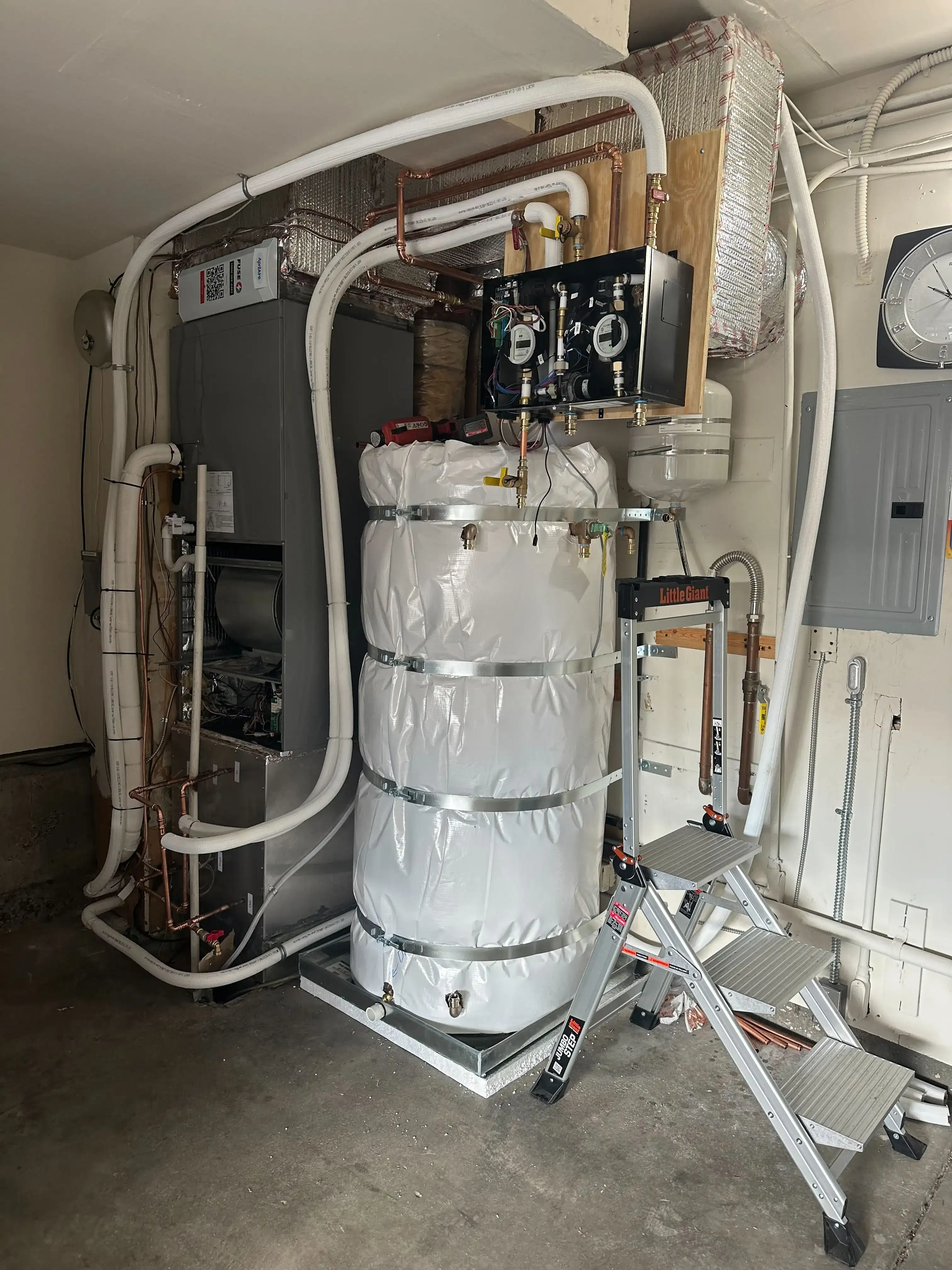
The Most Common Causes of Water Heater Leaks
There aren’t that many water heater leaking reasons, and most of them are due to normal wear and tear.
Corrosion Inside the Tank
Over time, rust forms inside the tank. Once the metal thins to the point where a hole and a water heater leak appear, repair becomes impossible.
High Water Pressure
Extremely high pressure in the system is a very big stress on the tank’s welds. That’s why it leads over time to microcracks, and water begins to seep.
Loose or Worn Fittings
Nuts and threaded connections slowly loosen. It happens because of vibration and temperature shifts Sometimes, simply tightening them is enough to stop the hot water heater from leaking on its own.
Sediment Buildup
Sediment breaks normal heat transfer. This causes the unit to operate under excessive load. So, it can lead to cracks in the welds at the bottom over time.
Age of the Unit
Most water heaters have a service life of 8 to 12 years. So, the older they are, the bigger the risk of a water heater leak caused by metal corrosion.
Is a Leaking Water Heater an Emergency?
Not every leak requires calling a plumber in the middle of the night, but some situations definitely can’t wait until morning. The main difference usually lies in where the water is coming from and how quickly it’s flowing.
| Situation | Is it possible to wait | Is it an emergency |
| A few drops from the T&P valve once an hour | Yes | — |
| A stream of water coming from under the tank | — | Yes |
| Smell of gas near the tank | — | Yes, a real one |
| A small amount of condensation in the summer | Yes | — |
| Water is flooding the floor and getting closer to the electrical panel | — | Yes |
Here’s a link to their common plumbing emergencies page — worth a look, since knowing what other situations (except the hot water heater leaking ones) count as urgent means you won’t be caught off guard if something else goes wrong down the line.
Repair or Replace a Leaking Water Heater?
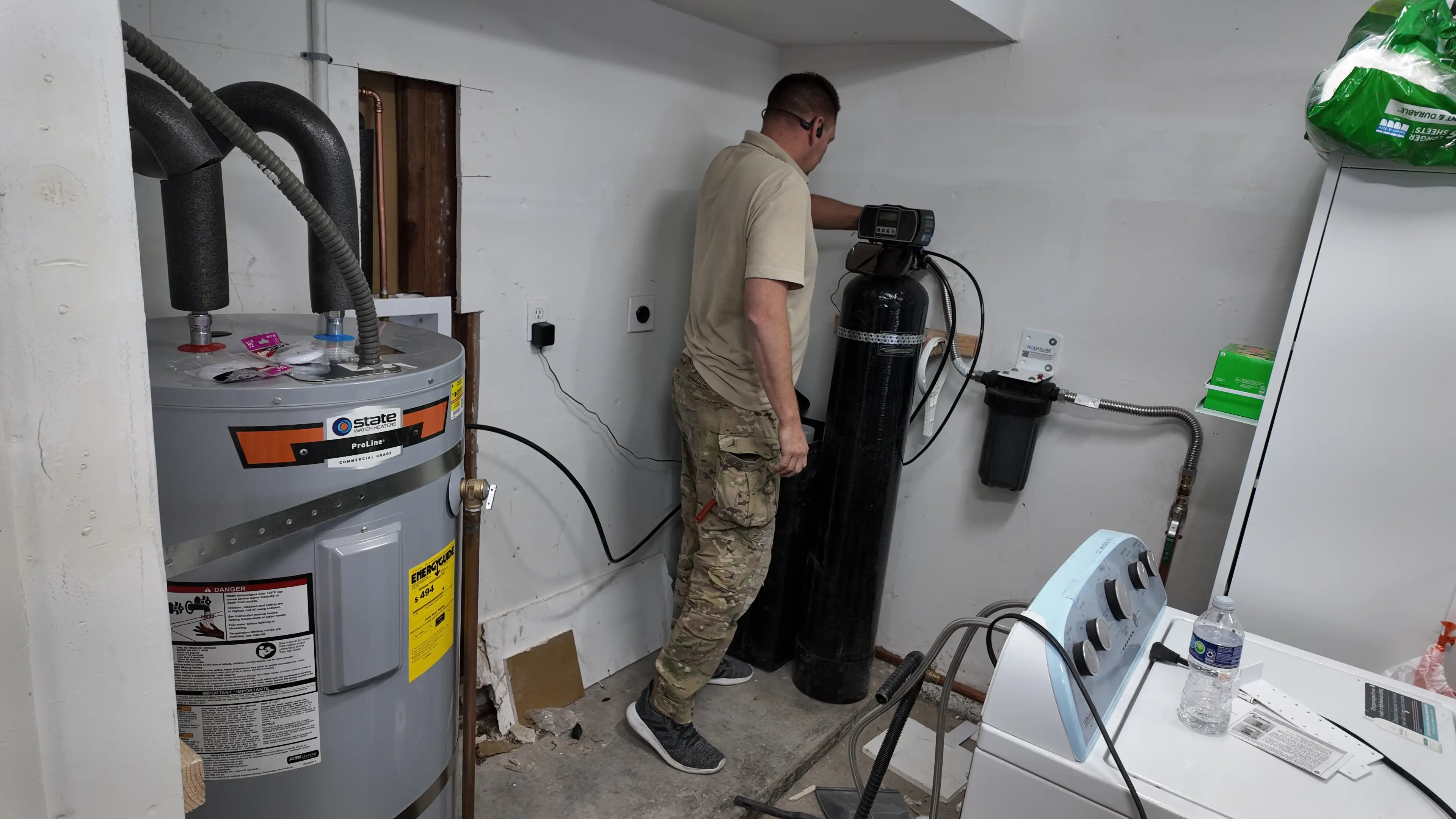
The answer depends on exactly where the leak is located and how old the tank itself is. Valves, fittings, and gaskets can almost always be replaced separately, but a crack in the tank of a leaking water heater can never be repaired.
| Sign | Repair? | Replacement? |
| Leak from the T&P valve | Yes | — |
| Leak from the drain valve | Yes | — |
| Loose fitting | Yes | — |
| Rust and water from the bottom of the tank | — | Yes |
| Tank is older than 10-12 years | In some cases | In most cases |
If a technician determines that the tank is indeed beyond repair, it makes more sense to consider water heater replacement in San Jose right away, rather than spending money on a temporary fix that won’t stop the corrosion anyway.
But when the problem is with a single component, the team that performs water heater repair in San Jose CA, can usually fix it in a single visit without having to replace the entire tank.
Get the Leak Checked Before the Water Damage Spreads
What looks like a harmless drip today can chew through flooring and the wall behind the tank tomorrow. Water tends to pool in corners nobody checks regularly. That’s exactly why a leak in a garage or basement can go unnoticed for so long.
The longer water leaking from heater, the better the chances mold starts creeping in under the flooring. And once water’s worked its way into the walls, you’re looking at a repair bill several times higher than what an early service call would’ve run you.
Fuse Service sends a technician to inspect the leaking water heater, locates the exact source of the leak, and honestly tells you whether a repair will suffice. If a replacement is needed, our specialists will select a tank of the appropriate capacity and install it the same day, whenever technically possible.
According to the U.S. Department of Energy, the correct tank capacity and heating temperature directly affect not only your electricity bills but also the tank’s service life. For gas models, the NFPA recommends an annual inspection of ventilation and gas connections by professionals who are familiar with local regulations.