 by
by 
The AC replacement range most homes fall into in California is from $4,500 to $12,000. So if you came hereto find out how much does it cost to replace an AC unit, this is the answer. But we’d be lying if we said that number means much on its own — a 900 square foot rental and a 2,800 square foot two-story aren’t shopping in the same aisle.
| Home Size | Typical AC Unit Replacement Cost |
| Under 1,500 sq ft | $4,500 – $6,800 |
| 1,500 – 2,500 sq ft | $6,000 – $9,500 |
| Over 2,500 sq ft | $8,500 – $12,000+ |
Treat that table as a starting point, not a quote. We’ve seen homes with the exact same square footage land $2,000 apart once ductwork, insulation, or an odd roofline entered the picture. That’s really the whole reason a proper replacement estimate exists in the first place.
What Forms an AC Replacement Quote?
A lot of people assume an AC replacement quote is just “new unit, here’s the price.” It’s not, or at least it shouldn’t be. If a contractor hands you one flat number with nothing broken out, that’s your cue to ask a few more questions before signing.
A proper quote covers the outdoor condenser, the indoor coil, the electrical side of things, and whatever it takes to pull permits where you live. Leave any of that off and there’s a decent chance something unexpected shows up on the final invoice.
| Line Item | What It Covers |
| Outdoor condenser unit | The main outside component that releases heat |
| Indoor coil | Controls the furnace or air handler to cool air |
| Refrigerant lines | Connects indoor and outdoor equipment |
| Labor and installation | Removal of old unit, setup of new system |
| Electrical work | Wiring, disconnects, breaker upgrades if needed |
| Permits and inspection | Required in most municipalities |
| Thermostat | Sometimes included, sometimes an add-on |
| Warranty | Manufacturer plus labor warranty terms |
Missing three or four lines from that table doesn’t automatically mean someone’s trying to shortchange you. It usually just means the quote is unfinished, and unfinished quotes are exactly how people end up in an awkward argument over a bill later.
Cost to Replace an AC Unit by System Type
Well, how much does it cost to replace an AC unit depending on the system? What you already have installed matters more than most homeowners expect, both for price and for how long the crew’s on site.
Central Air Conditioning
Central air is what most single-family homes run, and this is where the bulk of AC replacement jobs sit — usually $5,000 to $10,000. Ducts are already in the walls, so pricing tends to stay predictable, assuming those ducts aren’t falling apart.
Ductless Mini-Split Systems
No ducts sounds simple. It isn’t always cheap, though. Plan on $3,000 to $5,000 per zone, and a home needing four or five zones can blow past $10,000 without much trouble.
Packaged AC Units
In this setup, the condenser and coil are combined in a single outdoor cabinet. It’s actually a common solution where attic or basement space isn’t available. Figure somewhere around $6,000 to $11,000, depending on the capacity involved.
Heat Pump Systems (Cooling + Heating)
A heat pump handles cooling plus a chunk of your heating, which is why it costs more going in — typically $7,000 to $14,000. Plenty of homeowners claw that back within a few winters through lower energy bills.
AC Replacement Cost by Unit Size and Tonnage
Tonnage isn’t about weight, even though it sounds like it should be. It’s a measure of how much heat the system pulls out of your home each hour. Miss on this and you’ll either freeze half the house while the other half stays warm, or run a unit that basically never rests.
| Tonnage | Approx. Home Size | Estimated Equipment + Install Cost |
| 1.5 tons | Up to 900 sq ft | $3,800 – $5,500 |
| 2 tons | 900 – 1,200 sq ft | $4,200 – $6,200 |
| 3 tons | 1,200 – 1,800 sq ft | $5,000 – $7,800 |
| 4 tons | 1,800 – 2,400 sq ft | $6,200 – $9,200 |
| 5 tons | 2,400+ sq ft | $7,500 – $11,500 |
Square footage alone won’t tell a contractor the right tonnage — a real load calculation should. How many windows you have or even ceiling height can shift the number. That’s why AC unit replacement cost by tonnage never lines up perfectly with a real estate listing.
What Really Affects AC Replacement Cost
Neighbors with nearly the same house can end up with an average cost to replace AC unit $2,000 or $3,000 apart on their AC replacement cost quotes, and no, that doesn’t automatically mean somebody’s getting ripped off. A handful of specific things usually explain the gap.
Ductwork Condition
Leaky, old, or undersized ducts often need patching, sometimes partial replacement, before new equipment can actually do its job.
Equipment Brand and Efficiency Tier
Bigger-name brands and higher SEER2 ratings cost more at the register. The payoff usually shows up later, on the electric bill.
Electrical and Panel Upgrades
Older houses sometimes need a panel upgrade to handle a new system’s power draw — one reason AC replacement labor cost swings so much from house to house.
Accessibility of the Units
Equipment that’s hard to reach requires more time than units installed in accessible locations. For example, it may be a condenser in a cramped side yard or a coil behind years of attic storage
Permits and Local Code Requirements
Some cities are picky about inspections and updated permits, particularly once electrical work gets involved.
| Cost Factor | Why It Affects the Quote | Homeowner Action |
| Ductwork condition | Leaks or wrong sizing hurt airflow | Ask for a duct inspection before install |
| Equipment tier | Higher SEER2 units cost more upfront | Compare 10-year energy savings, not just sticker price |
| Electrical work | Older panels may need upgrades | Ask if your panel was checked during the quote |
| Accessibility | Tight spaces slow down labor | Mention unusual layouts when booking the estimate |
| Permits | Required in most areas | Confirm the contractor pulls permits, not just labor |
SEER2, Efficiency, and Long-Term Energy Cost
SEER2 took over from the old SEER rating in 2023, and it quietly shapes what you’ll pay every July and August after install day. Spend more upfront on a higher rating, pay less over the years the system runs.
What SEER2 Actually Measures
Basically, cooling output is measured against energy used, tested under conditions meant to reflect how a system actually behaves in a real house, not a lab.
Minimum vs. High-Efficiency Units
Entry-level equipment usually sits around SEER2 13.4 to 14. High-efficiency models can push past 18. That gap adds real money to your upfront air conditioner replacement cost, but you’ll feel the difference the other way too, on bills during peak summer.
Rebates and Incentives
Programs through ENERGY STAR can shave a real chunk off a high-efficiency system, and quite a few utilities stack their own rebate on top of that.
Why AC Replacement Quotes Can Be So Different
Ask three companies how much does it cost to replace an AC unit, and don’t be shocked if the numbers barely resemble each other. It’s rarely one contractor gouging you. It’s almost always about what’s actually sitting inside the number.
Different Equipment, Same Name
A 3-ton unit from two different companies can mean two completely different brands, warranty lengths, or efficiency tiers hiding under that same label.
Some Quotes Skip the Details
Sometimes a lower cost to replace AC unit just means permits, disposal, or electrical work got quietly left out — until they reappear later as an add-on nobody mentioned upfront.
Labor Quality Varies
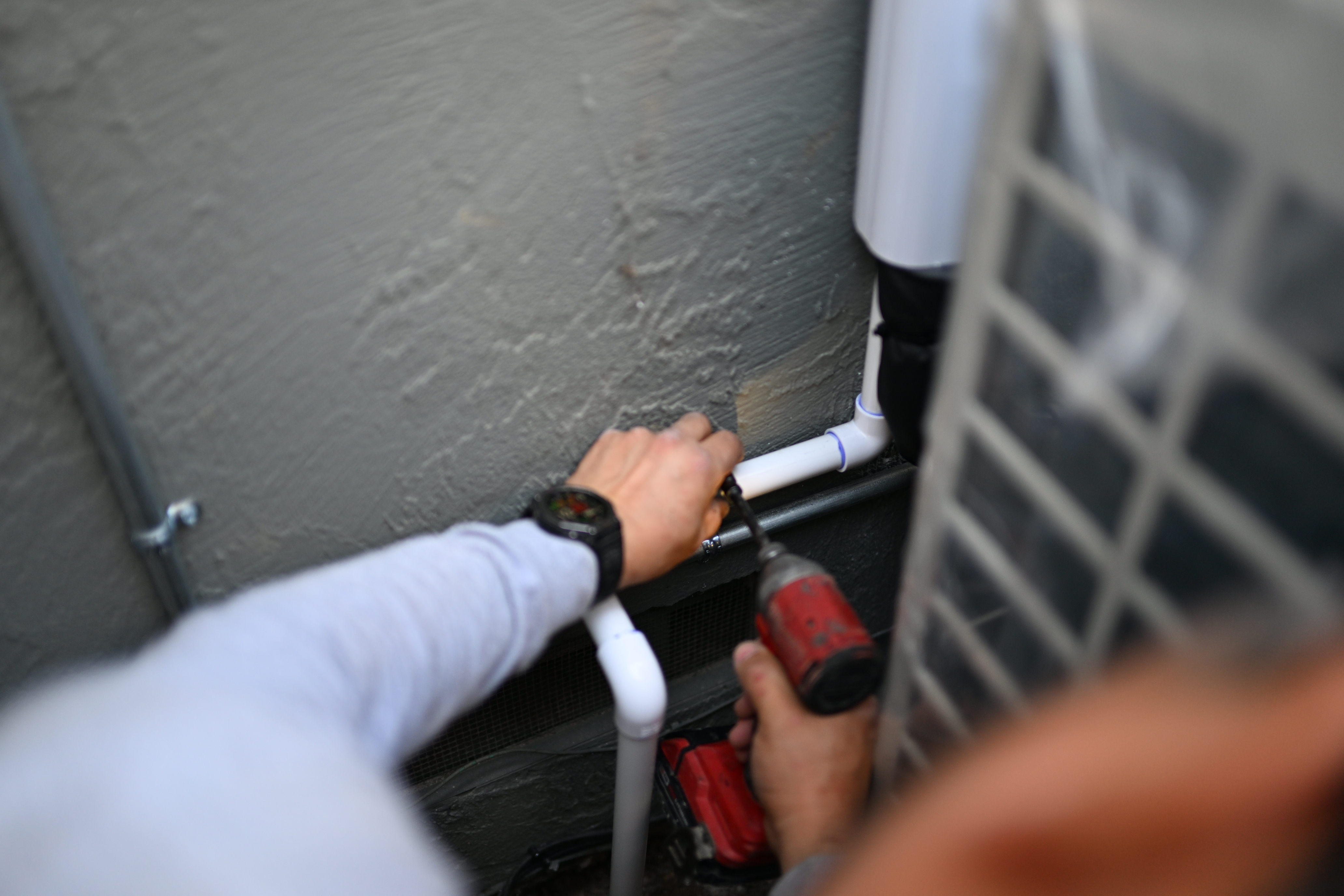
Getting the refrigerant charge right, actually testing airflow, keeping the install clean — none of that happens in a rush, and time is a big part of what a good crew is charging for.
“People compare quotes by the final number and stop there, when the real value sits in what that number actually includes — load calculation, correct cost by tonnage, indoor and outdoor equipment that actually matches, ductwork condition, airflow, the SEER2 rating, any electrical work, who’s handling permits, how clean the installation is, warranty coverage, and whether there’s someone local to call if it goes wrong.” — Oliver, HVAC technician at the Fuse Service team.
That’s exactly why a written AC replacement quote should never be one single line. If a contractor can’t walk you through each piece, that’s usually worth a second conversation, or a second quote altogether.
When to Call an HVAC Contractor for an AC Replacement Estimate
Some signs mean it’s time to stop patching and start planning. Constant repairs, bills creeping up, a unit already past 12 or 15 years old — these are the ones that come up over and over.
- Repairs happening more than once a season
- Bills climbing even though nothing about your habits changed
- Your system still runs on R-22, which is being phased out
- Certain rooms just never cool right, no matter the thermostat setting
- The unit is nearing, or already past, 15 years old
Sound familiar? Get an air conditioner replacement cost estimate on the calendar before the next heat wave forces your hand. And if you’re honestly not sure whether it’s a repair situation or a full replacement, air conditioning repair is usually the smarter first call.
The Practical Takeaway Before You Get Quotes
Before anyone shows up at your door, have a rough idea of your square footage and how old your system is to find out more precise AC replacement cost. Just those three things can sharpen your estimate and cut out a lot of back-and-forth guessing.
It also helps to ask every contractor the exact same questions — what tonnage they’re recommending, what SEER2 rating comes standard, whether permits and haul-away are already in the price. Quotes only compare fairly when everyone’s answering the same set of questions, not different ones. Curious where prices are trending more broadly? Our piece on HVAC replacement cost covers what’s shifting heading into next year.