 by
by 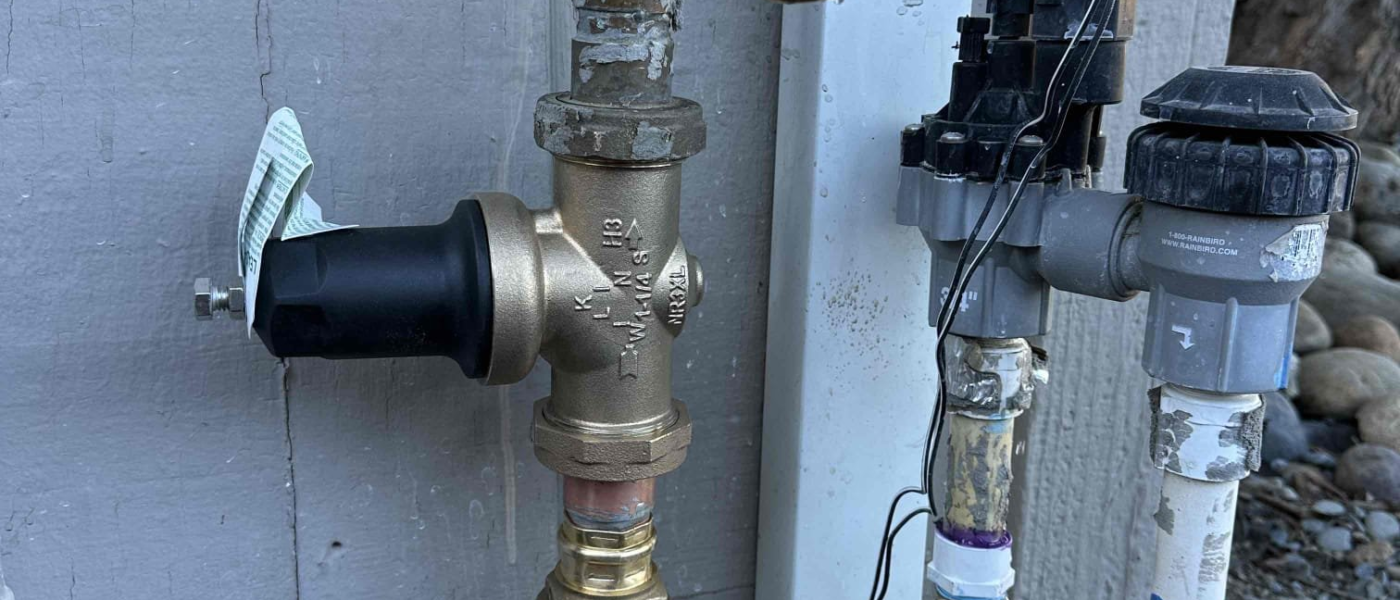
A backflow preventer is basically a one-way door for your pipes. It works like this: used water goes forward and never back to your drinking supply. You’ll find them tucked onto the line feeding a sprinkler, a boiler, a pool, or an outdoor spigot.
What Is a Backflow Preventer?
The purpose of a backflow preventer is to keep water moving in one direction. It should move from the city main toward your taps. When pressure shifts, it shuts the path behind the water. That protects the potable water in your home and in the homes around it.
Water can become dirty after it leaves the main water supply. Even a mop sink can contain dirty water. If this dirty water can get back into the clean water supply, it is called a cross-connection.
Plumbers call the hardware a backflow prevention device, or just “backflow” when they’re in a hurry. Sizes swing wildly. A hose fitting fits in your palm, while a commercial unit can outweigh a sack of cement. Plenty of owners only ask what is a backflow preventer after a notice from the water company hits the mailbox.
What Causes Water to Flow Backward in Plumbing?
Water flows backward when supply pressure drops, or when pressure on your side of the pipe climbs above the main’s. Those two events are called back-siphonage and backpressure. Together they explain backflow in plumbing.
On a normal day the main keeps everything moving toward your faucets. So in these cases water backflow almost never happens. It takes a sudden swing in pressure. The EPA covers both causes in its cross-connection guidance for public water systems.
Back-Siphonage: When Supply Pressure Drops
Back-siphonage happens when pressure in the supply line falls low enough to pull water backward. A broken water main can cause it. So can firefighters opening several hydrants on the same street.
Say a hose is lying in a bucket of fertilizer mix while the main loses pressure. That mix can climb the hose and slip through the spigot into your house lines. A hose left in a kiddie pool or a tub carries the same risk.
Backpressure: When Pressure Comes From the Other Side
Backpressure happens when pressure on your side of the connection rises above supply pressure and forces water the wrong way. Boilers are the classic case. Heated water expands, and the pressure in the loop climbs.
If the fill line has no protection, hot treated water can shove its way back into the house supply. A booster pump on a sprinkler system can cause the same thing, and so can a tank mounted higher than the house. Only some devices can handle backpressure, and the types section below shows which ones.
What Does a Backflow Preventer Look Like?
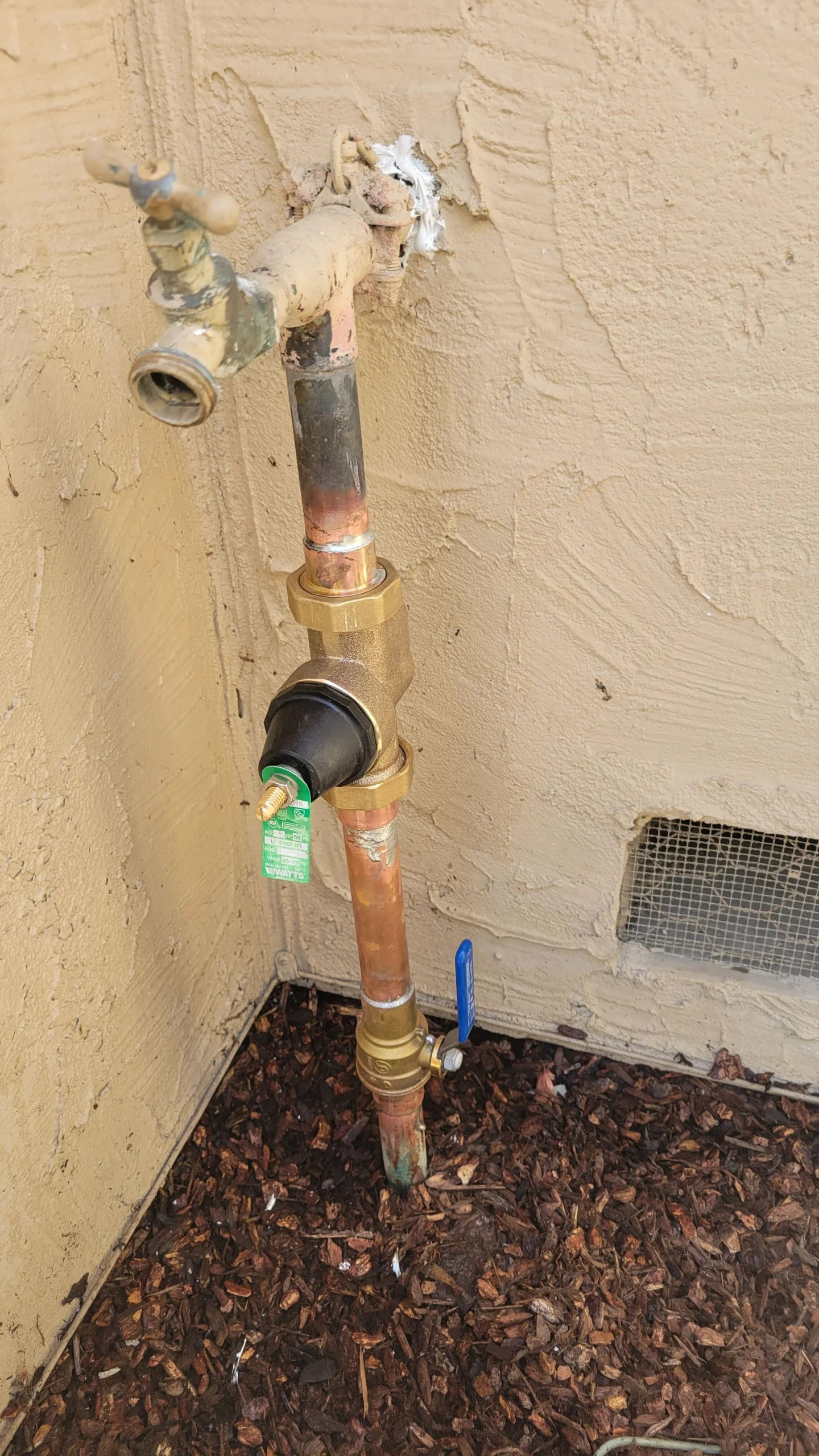
It’s almost always a squat cluster of brass or bronze valves with a couple of small test ports poking out the side. So what does a backflow valve look like once someone’s actually installed it in your yard or garage? That depends on the type:
- Pressure vacuum breaker: a vertical pipe topped with a domed cap, usually near a lawn.
- Double check valve assembly: a horizontal body with two shutoff handles and test ports along the side.
- Reduced pressure zone assembly: a bigger horizontal unit with a relief port underneath.
- Hose bibb vacuum breaker: a small brass fitting on the end of an outdoor spigot.
Brass has scrap value, so theft happens more than people expect. That’s why some owners lock a metal cage around the unit. Spot a cage, or an insulated blanket wrapped near the meter or along a sprinkler line, and there’s a good chance that’s what’s underneath. Half the time people only discover their own unit while yanking weeds or trimming a hedge along the fence line.
How Does a Backflow Preventer Work?
A backflow preventer works through spring-loaded check valves that open when water flows forward and close when it tries to reverse. Some models add a relief port that dumps water outside if pressure goes out of balance. Contaminated water never finds a path back into the drinking water supply.
Inside a double check or RPZ unit, the process runs like this:
- Water arrives from the main at normal water pressure.
- The pressure pushes the first check valve open against its spring.
- Water passes through and opens the second check valve, if the design has one.
- It continues on to your sprinklers, boiler, or house plumbing.
- When supply pressure drops or downstream pressure climbs, both springs snap the checks shut.
- In an RPZ, a relief valve between the checks opens and drains any leaked water outside.
Springs inside a backflow valve are light, which is why worn ones and small bits of grit cause so many failures. A pressure vacuum breaker takes a different approach. It has an air inlet in place of the second check, and that inlet opens when pressure drops, letting air break the vacuum.
Where Is a Backflow Preventer Located?
Backflow preventer location varies with the device and the hazard it guards against. Outdoor faucets, irrigation system lines, and the area near the water meter cover most homes.
| Location | Typical device | What it protects |
| Outdoor faucet | Hose bibb vacuum breaker | House lines from hoses left in pools, buckets, or tubs |
| Irrigation line near lawn or planter | PVB or RPZ | Drinking water from fertilizer, pesticides, and soil |
| Near the water meter or where the main enters the property | DCVA or RPZ | The public water system |
| Boiler fill line in a garage or utility room | RPZ or DCVA | House supply from treated boiler water |
| Fire sprinkler line | DCVA or RPZ | Potable water from stagnant sprinkler water |
| Faucet spout above a sink or appliance | Air gap | The supply from standing drain water |
Around San Jose, sprinkler units usually sit in a front-yard planting bed or along a side fence. Boiler units end up in garages, closets, and utility rooms. On calls around town, we’ve found sprinkler units half buried in mulch and boiler units hiding behind stacks of storage boxes.
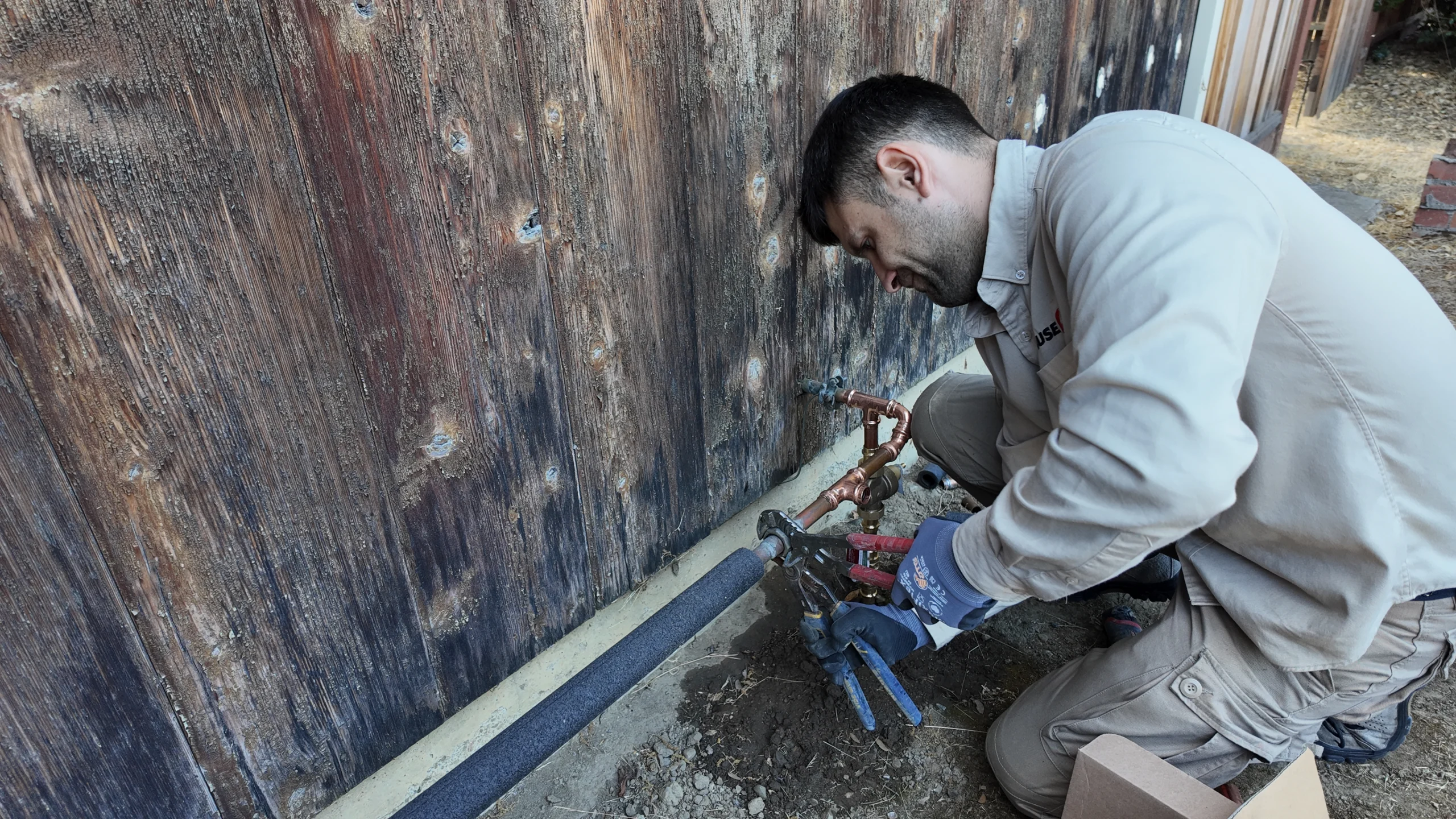
“We find most of them on irrigation lines and right next to the meter. Owners often don’t know they have one until we point at it. On an inspection we check the mounting height, make sure the shutoff handles turn, and watch the relief port for drips. A unit can look perfect and still fail, though. Grit on a check seat or a weak spring is invisible from the outside. The test gauge shows it in about a minute.” — Ben, professional plumber at Fuse Service.
Types of Backflow Preventers and Where They Are Used
There are five common types of backflow preventers, and each one suits a different level of risk. The right pick depends on how hazardous the water is and whether backpressure can occur.
Air Gap
An air gap is an open space between a supply outlet and the water it feeds. Water can’t jump the space, so nothing needs testing. Your kitchen faucet is the everyday example, with the spout sitting above the sink rim. Codes generally call for a gap of at least twice the opening’s diameter and never under one inch.
Pressure Vacuum Breaker (PVB)
Ask any irrigation contractor which device goes on a sprinkler system, and PVB is the answer nine times out of ten (well, almost always). It’s built for back-siphonage specifically. Pressure drops, a spring-loaded air inlet pops open, and the incoming air breaks whatever vacuum was forming. One installation quirk worth knowing: it has to sit at least 12 inches above the highest sprinkler head on that line, or it won’t do its job right.
Double Check Valve Assembly (DCVA)
A double check valve assembly (DCVA) has two check valves in a row, a shutoff valve at each end, and test ports. It handles back-siphonage and backpressure, but only where the hazard is low. Fire sprinkler lines are a common spot. Because a DCVA has no relief port to drain, it can also live in a below-grade vault.
Reduced Pressure Zone Assembly (RPZ)
A reduced pressure zone assembly (RPZ) gives the strongest protection of the mechanical devices. Two check valves surround a relief valve, and the space between them stays at lower pressure than the supply. If a check leaks, the relief valve dumps the water outside.
RPZ units go where the water could hurt someone, such as a boiler with chemical additives or a sprinkler line with fertilizer injection. Many commercial plumbing jobs need one too. It has to drain freely, so it can’t sit anywhere that floods.
Hose Bibb Vacuum Breaker
A hose bibb vacuum breaker is a small fitting that threads onto an outdoor spigot. It stops a hose from siphoning water back into the house, and it costs a few dollars. It protects only that one faucet. It also shouldn’t stay under constant pressure, which happens when a shutoff nozzle is left on the hose.
| Type | Back-siphonage | Backpressure | Hazard level | Common use |
| Air gap | Yes | Yes | Low or high | Sinks, appliances, tanks |
| PVB | Yes | No | Low | Lawn irrigation |
| DCVA | Yes | Yes | Low | Fire lines, some commercial buildings |
| RPZ | Yes | Yes | High | Boilers, commercial sites, chemical injection |
| Hose bibb vacuum breaker | Yes | No | Low | Outdoor faucets |
When It Makes Sense to Install a Backflow Preventer
A backflow preventer makes sense any time your plumbing can touch something other than clean water. Knowing what is a backflow preventer covers half of it. The rest is spotting the risky spots around your own property.
These situations usually call for one:
- An in-ground sprinkler system, or a hose connection with a long run
- A boiler or hydronic heating system with a fill line
- A pool, spa, or fountain filled from the house supply
- A private well, rain catchment, or second water source on the same lot
- A restaurant, salon, car wash, or shop that uses chemicals
- A fire sprinkler system
- A remodel that adds new fixtures or connections
Different types of backflow preventers suit each case. The backflow preventer used for a new pool fill line or a chemical-fed boiler is usually a higher grade than the one on a basic sprinkler zone.
California’s backflow prevention rules follow the same logic. The State Water Resources Control Board works with local water suppliers, and the suppliers decide what your address needs. One water backflow event can reach neighbors on the same line, which is why they take it seriously.
Not sure where your property stands? A San Jose plumber can walk the site, find the cross-connections, and tell you what needs protection.
How Often Should a Backflow Preventer Be Tested?
Test a backflow preventer once a year, and again after installation or any repair. California water suppliers typically require annual tests for assemblies that protect the public supply, and a certified tester has to perform them.
A backflow testing visit usually takes under an hour. The tester connects a gauge to the test ports, confirms each check holds pressure, and checks that the relief valve opens at the right point. Results go to your water provider.
In San Jose, the reporting depends on your address. Your water comes from San Jose Water, the City’s municipal utility, or Great Oaks Water Company. Each one runs its own backflow prevention program, with separate notices and deadlines. Your water bill shows which provider you have. The USC Foundation for Cross-Connection Control and the City of San José both publish guidance you can read.
Don’t wait for the annual notice if any of these happen:
- A main break or a sudden pressure change nearby
- Water dripping or spraying from the relief port
- Impact damage from a mower, a car, or landscaping work
- A device that was moved or re-plumbed
A failed test usually means a modest repair. The culprit is normally a fouled seat or a worn rubber part, and a plumber can swap it and retest. Our team does plumbing repair on failed assemblies, and our pipe repair service handles corroded or leaking lines around them. If the unit can’t be saved, we replace it and file the paperwork.